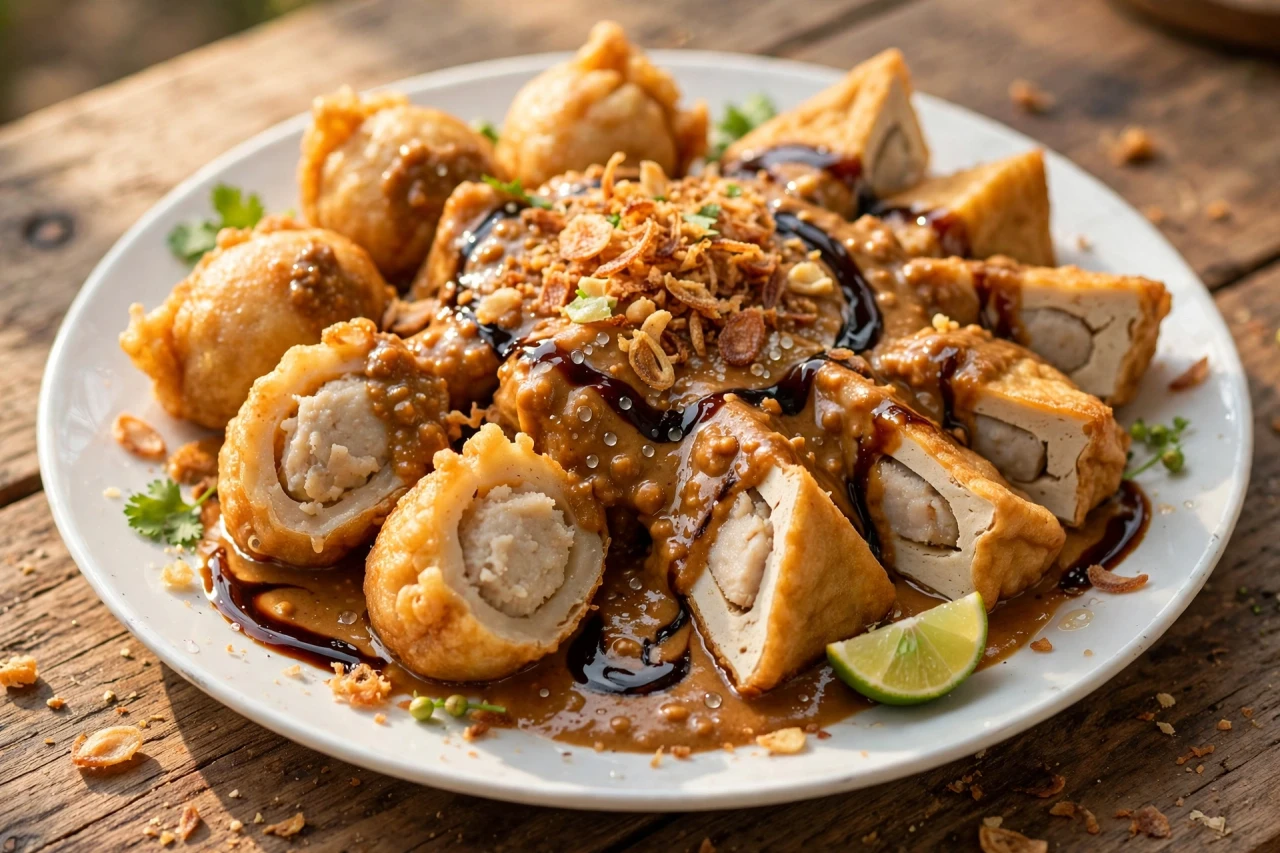
Batagor is Bandung's gift to the world of street food: bakso tahu goreng — fried fish dumplings and stuffed tofu — cut into bite-size pieces and drowned in a thick, sweet-savory peanut sauce. One bite tells you everything: the shattering crisp shell, the springy fish-cake interior, and that glossy sauce with its drizzle of kecap manis and squeeze of lime. It's the snack West Java is famous for, and it's absolutely makeable at home.
The heart of batagor is the fish paste — fresh mackerel (tenggiri) pounded or ground with tapioca flour into a bouncy, savory dough. Wrapped in wonton skins, stuffed into tofu, then deep-fried to a deep golden crunch. This recipe walks you through the whole process in under an hour, including a from-scratch peanut sauce that beats anything from a jar. Fair warning: making batagor once tends to start a weekly habit.
Crispy, savory, saucy — Bandung's beloved street snack.
Recipe Info
- Prep time: 25 minutes
- Cook time: 25 minutes
- Total time: 50 minutes
- Servings: 6 (about 24 pieces)
- Calories: approx. 420 kcal per serving (6 pieces with sauce)
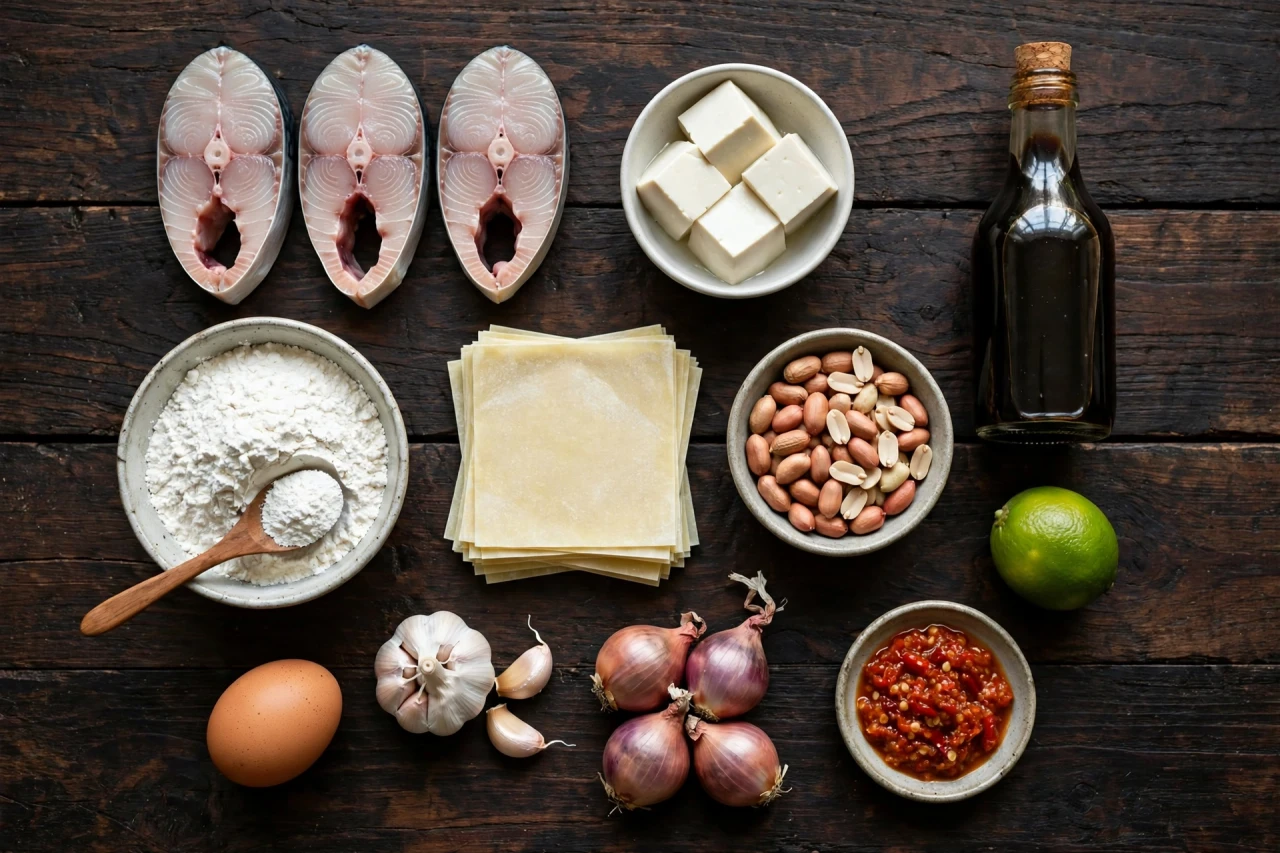
Fresh fish and tapioca flour are the non-negotiable base.
Ingredients
- For the fish paste:
- 400 g (14 oz) fresh mackerel (tenggiri) fillets, skin and bones removed
- 150 g (1 cup) tapioca flour (tapioca starch)
- 1 large egg
- 3 cloves garlic, minced
- 2 shallots, finely minced
- 1 tsp fine sea salt
- ½ tsp ground white pepper
- 1 tsp granulated sugar
- 100 ml (scant ½ cup) ice-cold water
- For wrapping and frying:
- 12 square wonton wrappers
- 6 pieces firm white tofu (tahu putih), halved
- 750 ml (3 cups) neutral oil, for deep frying
- For the peanut sauce:
- 150 g (1 cup) roasted peanuts, skins rubbed off
- 3 cloves garlic
- 3–5 red bird's eye chilies (optional, for heat)
- 2 tbsp kecap manis (Indonesian sweet soy sauce)
- 1 tbsp palm sugar, grated
- 1 tsp salt
- 200 ml (¾ cup) water
- 1 tbsp fresh lime juice
- For serving: crispy fried shallots, lime wedges, sambal on the side
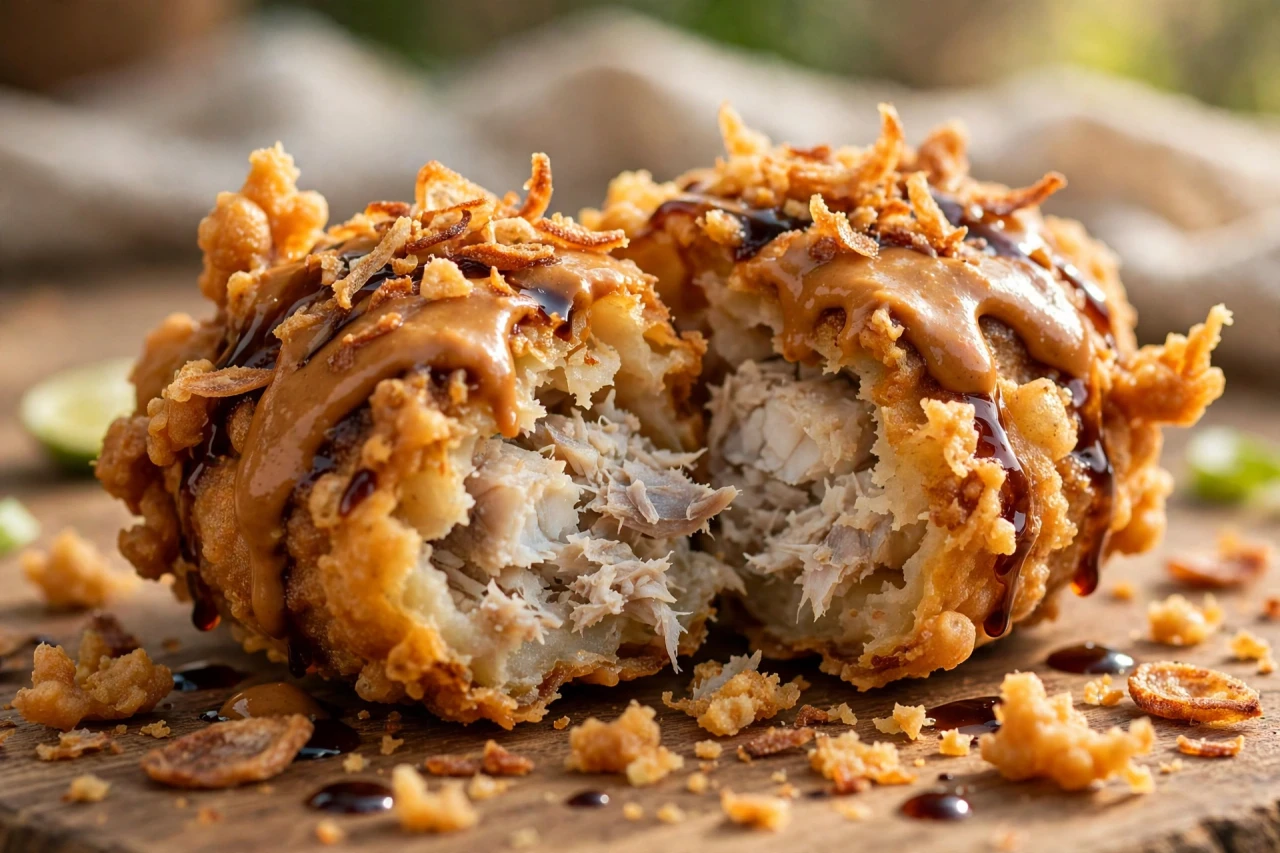
Shatteringly crisp outside, bouncy fish cake inside.
Instructions
- Make the fish paste. Cut the mackerel into chunks and pulse in a food processor until it forms a smooth, sticky paste — about 1 minute. Transfer to a large bowl and add the tapioca flour, egg, garlic, shallots, salt, white pepper, and sugar. Stir vigorously in one direction while drizzling in the ice-cold water a little at a time, until you have a thick, tacky, springy dough. Don't overmix once it comes together.
- Shape the batagor. Scoop a heaped tablespoon of fish paste into the center of each wonton wrapper, gather the edges up loosely around the filling (leave the top open so the fish is exposed), and pinch lightly. For the tofu, scoop out a shallow pocket in each half with a spoon and press in a generous spoonful of fish paste, smoothing the top.
- Heat the oil. Pour the oil into a deep, heavy pot or wok to a depth of about 8 cm (3 in) and heat to 170°C (340°F). A cube of bread should sizzle and turn golden in about 30 seconds. Too hot and the outside burns before the fish cooks through; too cool and they absorb oil.
- Fry in batches. Lower 4–6 pieces at a time into the oil — wrapper side first for the dumplings. Fry 5–7 minutes, turning occasionally, until deeply golden and crisp all over. The tofu pieces go in paste-side down first so the filling sets before you turn them. Drain on a wire rack over a tray (not paper towels — they steam).
- Blend the peanut sauce. While the batagor fries, blend the roasted peanuts, garlic, and chilies with the water until mostly smooth — a little texture is welcome. Pour into a small saucepan, stir in the kecap manis, palm sugar, and salt, and simmer 5 minutes until thickened and glossy. It should coat a spoon thickly. Stir in the lime juice off the heat.
- Cut and plate. Let the fried batagor rest 2 minutes (the filling finishes setting), then cut each piece into 3–4 bite-size chunks with kitchen scissors — the classic street-stall cut. Arrange on a serving plate.
- Sauce and serve. Spoon the warm peanut sauce generously over the cut batagor, add an extra zigzag of kecap manis, scatter crispy fried shallots over the top, and serve immediately with lime wedges and sambal on the side. Batagor waits for no one — eat it hot.
Tips & Variations
- Fish choice matters: Mackerel (tenggiri) is the classic for its firm texture and clean flavor, but Spanish mackerel, kingfish, or even firm white fish like snapper work. Avoid oily soft fish like sardines — they make the paste greasy. The fish must be very fresh; there's nowhere for off flavors to hide.
- Ice water is the bounce secret: Cold liquid keeps the fish proteins firm while mixing, which is what gives batagor its signature springy chew. Add it gradually — you want a thick, sticky dough, not a batter.
- Don't crowd the fryer: Overloading drops the oil temperature and produces greasy, pale batagor. Fry in small batches and let the oil come back up to 170°C (340°F) between rounds. A thermometer pays for itself here.
- Siomay detour: Steam half your shaped dumplings instead of frying for siomay — Bandung's other famous fish dumpling. Same dough, same peanut sauce, 15 minutes in a steamer. Two snacks from one batch.
- Make-ahead friendly: Shape the dumplings and tofu up to a day ahead, refrigerate covered, and fry just before serving. Uncooked fish paste also freezes well up to 1 month — thaw overnight in the fridge.
- Sauce consistency: Peanut sauce thickens as it cools. If it gets too thick, whisk in hot water a tablespoon at a time until it flows in ribbons. Street vendors like it thick enough to cling — aim for that.
- Dial the heat: The chilies in the sauce are optional — leave them out for a kid-friendly version, or serve sambal on the side so everyone controls their own fire. A few drops of lime juice in the sauce brightens everything.
Nutrition Note
At about 420 kcal per serving of six pieces with sauce, batagor is a satisfying snack that earns its calories honestly — mackerel delivers quality protein and omega-3s, peanuts add more protein and healthy fats, and tofu contributes plant protein. The deep-frying and the sugary peanut sauce are the indulgent parts: draining well on a rack (not paper) keeps oil absorption down, and you can lighten the sauce with less palm sugar. Like all great street food, it's a sometimes-treat, not a daily staple — savor the crunch and share the plate.
Sponsored: see today's deals on recommended kitchen essentials
FAQ
Can I use frozen fish for batagor?
You can, but thaw it completely and squeeze out every drop of excess water first — extra moisture makes the paste loose and the fried shell soggy. Fresh mackerel gives the springiest, cleanest-tasting result by far.
Why is my fish paste tough instead of bouncy?
Overmixing after the tapioca flour goes in develops too much structure — stir just until the dough comes together. Warm (not ice-cold) water is the other culprit: cold liquid is essential for that springy bite.
What if I can't find wonton wrappers?
Spring roll wrappers cut into quarters work as a substitute, though they're thinner and fry up extra shatter-crisp. In a pinch, just fry spoonfuls of the paste as fish cakes and stuff extra tofu — the flavor is identical.
How is batagor different from siomay?
Same fish paste, different finish: batagor is deep-fried (goreng) for crunch, while siomay is steamed for a soft, delicate bite. Both get the same peanut sauce treatment, and Bandung vendors famously sell them side by side.
Can I air-fry batagor instead of deep-frying?
An air fryer at 200°C (400°F) for 12–15 minutes gives a decent crisp with far less oil — brush the pieces lightly with oil first. It won't match the shattering crunch of true deep-frying, but it's a solid lighter option.
Crunchy, savory, saucy — batagor is Bandung street food at its absolute best, and now you can make it in your own kitchen. Did you go the full fried route or steam half as siomay? Leave a comment below and tell us how spicy you took the peanut sauce!




Comments
Post a Comment