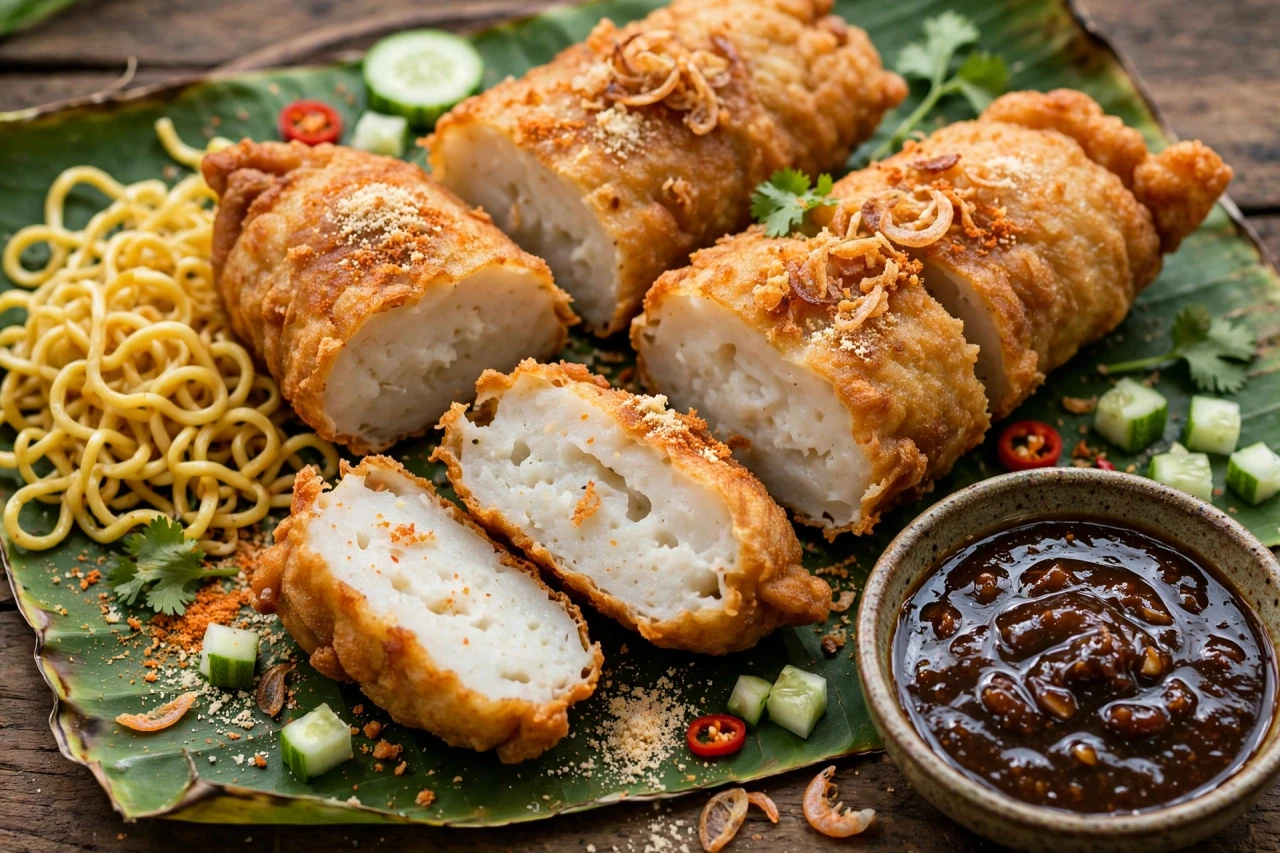
Pempek is Palembang's gift to Indonesian street food: springy mackerel-and-tapioca fish cakes, boiled until they float, fried golden, and drowned in cuko — a dark, glossy sauce hitting sweet, sour, salty, and spicy at once.
Texture is the whole game: ice-cold water worked into the fish paste gives bounce, and gently folding in the tapioca (never kneading) keeps the pempek chewy-tender, not dense. This lenjer (log) version is the easiest shape to master, and the cuko comes together in one pot.
Pempek Palembang with glossy sweet-sour cuko.
Recipe Info
- Prep time: 30 minutes
- Cook time: 25 minutes
- Total time: 55 minutes (plus cuko cooling)
- Servings: 12 pieces (6 snack servings)
- Calories: approx. 280 kcal per 2 pieces with cuko
Ingredients
For the pempek:
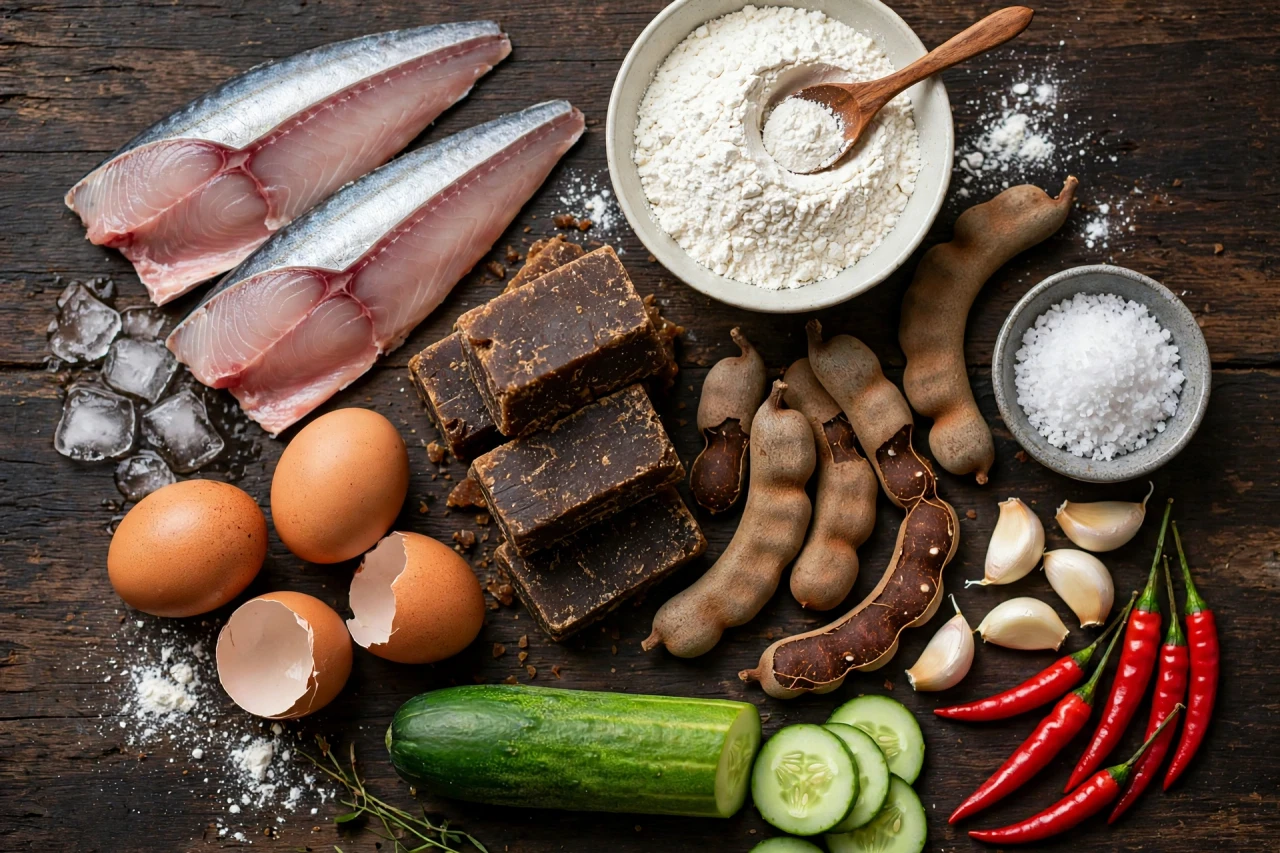
- 500 g (1.1 lb) tenggiri fillet, ground — or any firm white fish
- 250 g (2 cups) tapioca starch, plus extra for dusting
- 1 large egg
- 180 ml (¾ cup) ice-cold water
- 2 tsp fine sea salt
- 1 tsp granulated sugar
- ½ tsp white pepper
- 3 cloves garlic, minced to a paste
For the cuko sauce:
- 200 g (1 cup, packed) palm sugar (gula aren)
- 500 ml (2 cups) water
- 50 g (¼ cup) tamarind pulp, soaked in hot water
- 5 cloves garlic
- 8 red bird's eye chilies, or to taste
- 1 tbsp dried shrimp (ebi), toasted — optional
- 1½ tsp fine sea salt
For serving:
- 1 cucumber, diced
- 100 g (3.5 oz) yellow wheat noodles, blanched — optional
- 2 tbsp ground toasted dried shrimp, for sprinkling
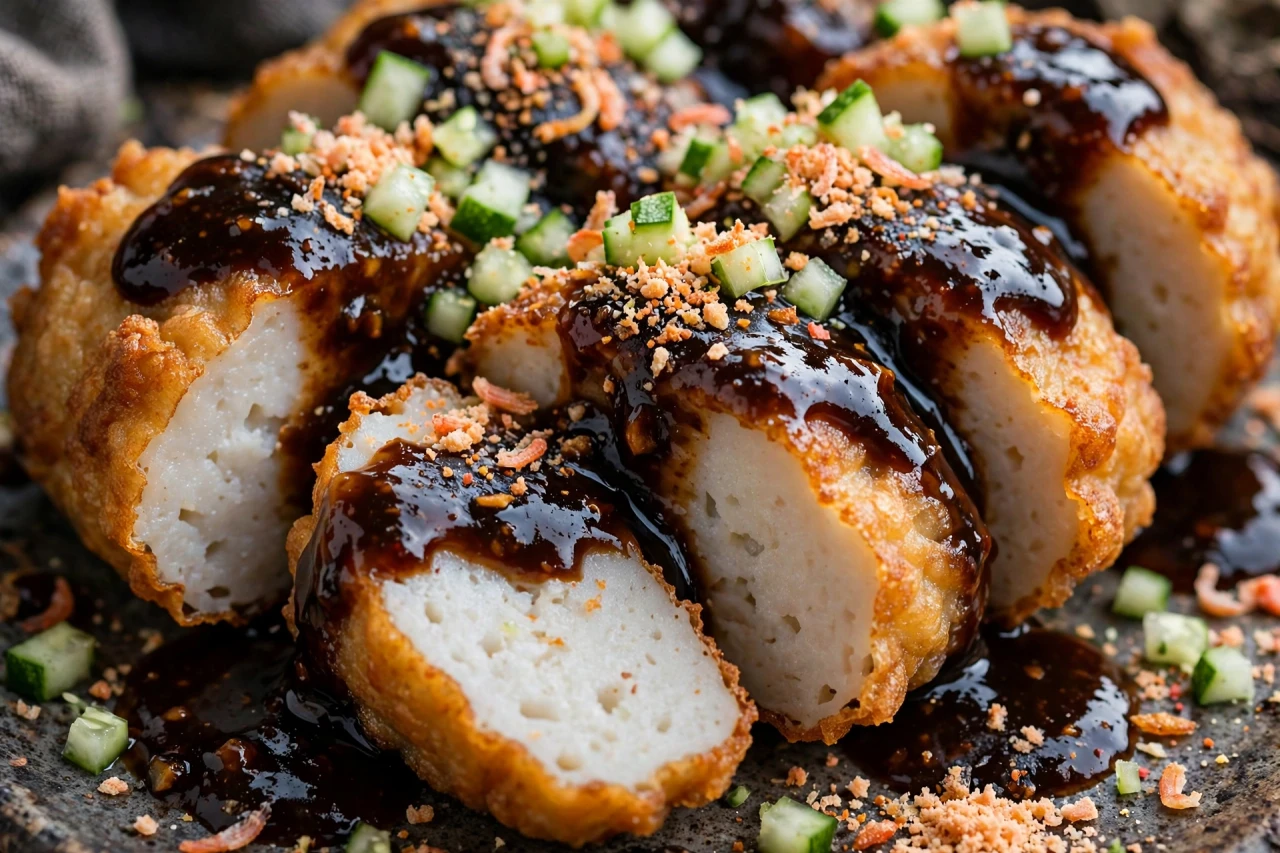
Chewy inside, crisp outside — drenched in that addictive cuko.
Instructions
- Make the cuko. Simmer palm sugar, water, and tamarind 10 minutes. Blend garlic, chilies, shrimp, and a ladle of hot liquid to a paste; stir back in with the salt, simmer 5 more minutes, then strain and cool.
- Mix the fish paste. Work the ground fish with salt, sugar, white pepper, and garlic until sticky, about 2 minutes. Beat in the egg, then drizzle in the ice-cold water.
- Add the tapioca. Fold in the tapioca gently until just combined — stop at the first sign no dry pockets remain. Overworking makes pempek rubbery.
- Shape and boil. Dust your hands with tapioca and roll into 12 logs, about 15 cm × 3 cm. Lower into rolling boiling water; when they float, cook 3 more minutes, then lift into ice water.
- Fry. Shallow-fry in hot oil (175°C / 350°F) 3–4 minutes per side until deep golden; drain well.
- Serve. Slice diagonally and serve over cucumber and noodles with a generous ladle of cuko and ground shrimp.
Mackerel, tapioca, and palm sugar — the holy trinity of pempek.
Tips & Variations
- Pick the right fish: Tenggiri is traditional, but snapper, cod, or pollock all work — freshness matters more than species.
- Keep it ice-cold: Cold water keeps the fish proteins bouncy; room-temperature water gives dense pempek.
- Trust the float: Floating means cooked — but give 3 more minutes so the center sets fully.
- Kapal selam: Seal a spoonful of beaten egg inside a dough ball for the "submarine" version; boil the same way.
- Freeze ahead: Freeze boiled pempek up to a month; fry from frozen, adding 2 minutes.
- Balance your cuko: Too sour? More palm sugar. Too sweet? Lime juice. Too mild? More rawit.
- Crispier crust: Pat the boiled logs very dry before frying — moisture kills the crust.
Nutrition Note
Two pieces with cuko run about 280 kcal with 16 g of lean fish protein. Most of the indulgence is frying oil and palm-sugar cuko — air-frying at 200°C (400°F) for 12 minutes and going lighter on the sauce trims both.
Sponsored: see today's deals on recommended kitchen essentials
FAQ
Why is my pempek dense and rubbery?
Overworked dough or warm water. Fold the tapioca in gently and keep everything ice-cold.
Can I use frozen fish?
Yes — thaw fully and squeeze out excess water first, or the dough turns slack.
How long does pempek keep?
Boiled pempek lasts 3 days refrigerated or a month frozen. Fry just before serving for the best crust.
My cuko is too sour — how do I fix it?
Stir in more palm sugar a tablespoon at a time; tamarind strength varies, so taste and adjust.
What is ebi and is it required?
Dried shrimp for savory depth — skip it and bump the salt slightly.
This pempek Palembang brings South Sumatra's beloved street food to your kitchen — chewy, golden, swimming in unforgettable sweet-sour cuko. Make a double batch; it never lasts long. Tried it? Leave a comment below and tell us your cuko heat level!




Comments
Post a Comment