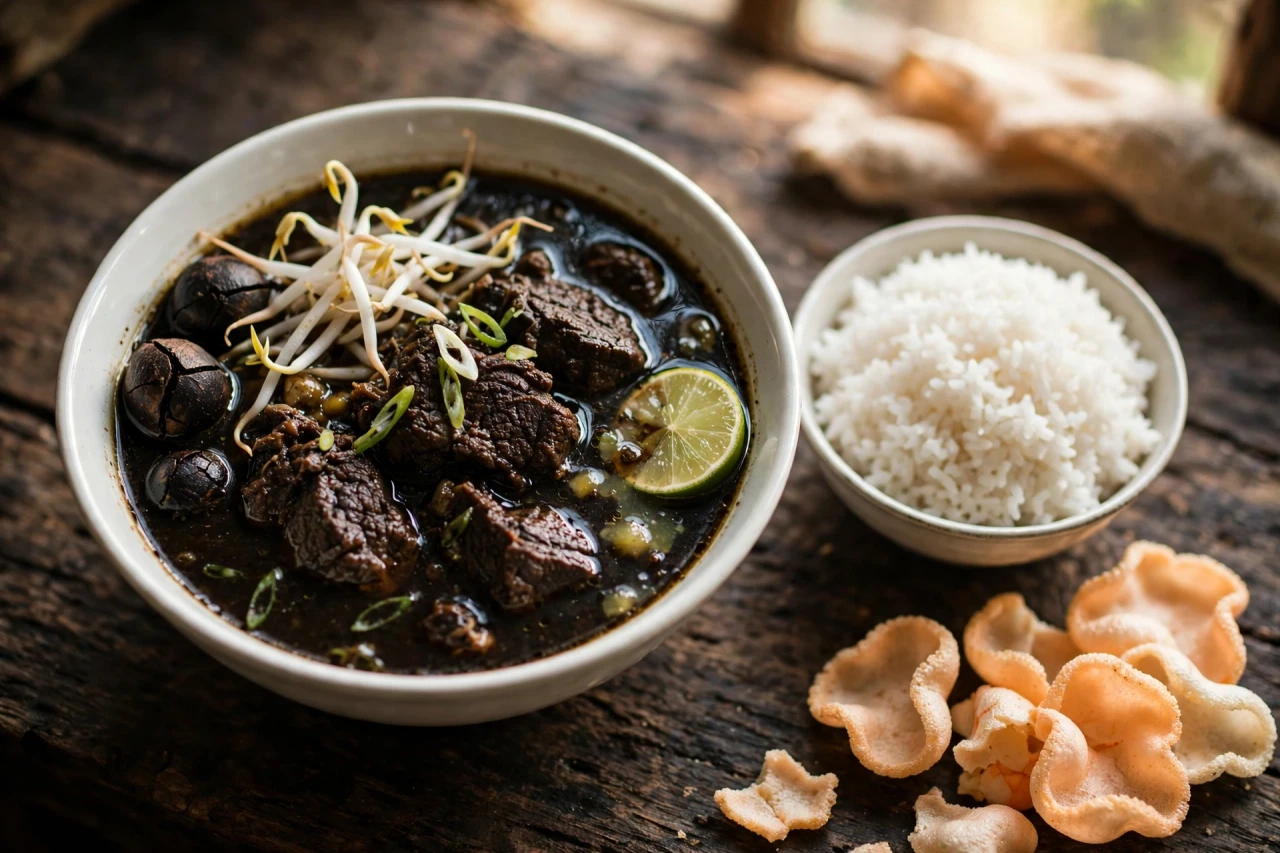
Rawon is East Java's most dramatic soup: a broth stained ink-black by keluak, the fermented black nut that gives this dish its unforgettable earthy depth. Beneath that striking color lies some of the most comforting beef soup you'll ever taste — tender chunks of slow-simmered beef in a richly spiced, savory broth, brightened with bean sprouts, scallions, and a squeeze of lime.
This recipe walks you through the traditional method, from grinding the bumbu spice paste to simmering the beef until it yields at the touch of a spoon. Don't be intimidated by the keluak — once cracked and mashed into the paste, it melts seamlessly into the broth. Serve with steamed rice, sambal, and shrimp crackers for the full Surabaya experience.
East Java's famous black beef soup, rich with keluak depth.
Recipe Info
- Prep time: 30 minutes
- Cook time: 2 hours 15 minutes
- Total time: 2 hours 45 minutes
- Servings: 6 bowls
- Calories: approx. 380 kcal per bowl (plus rice)
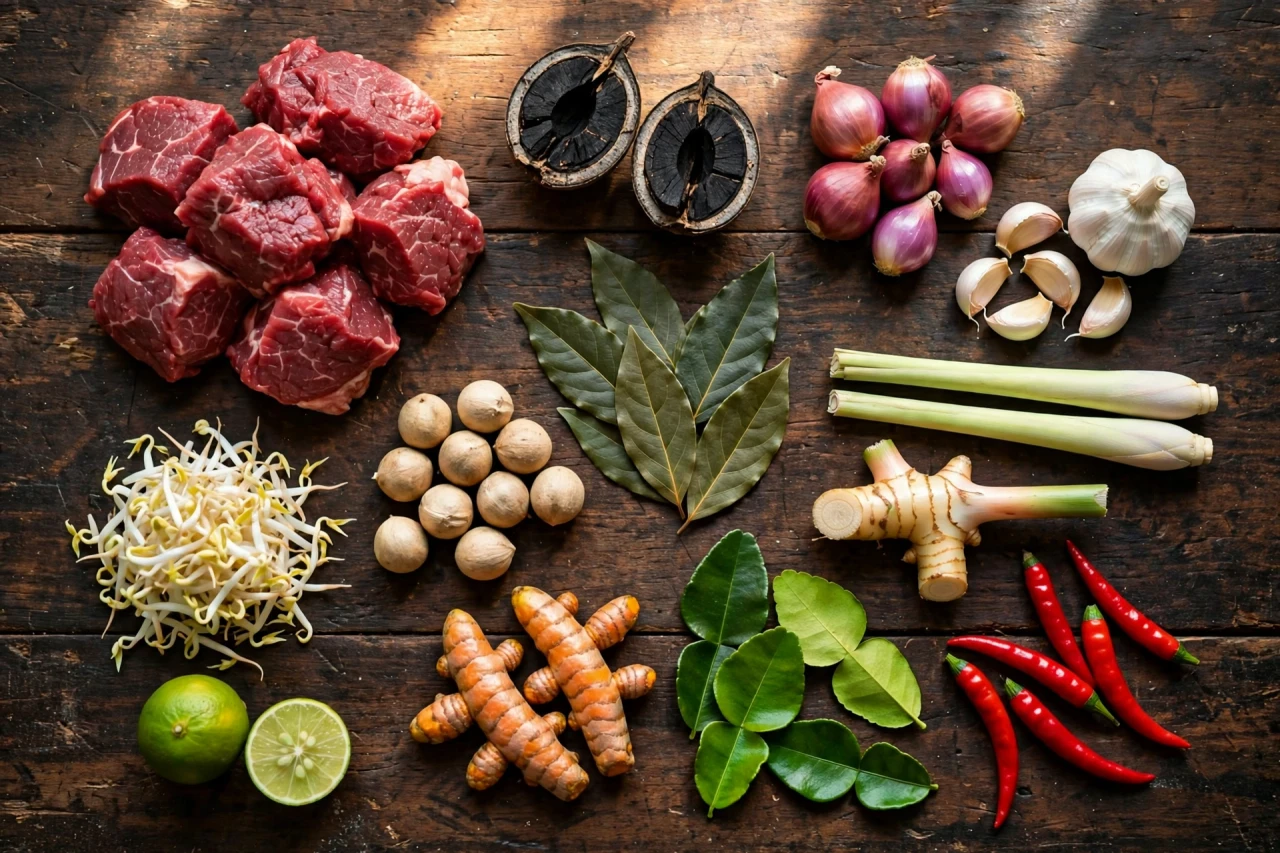
The keluak nut is the non-negotiable star of Rawon.
Ingredients
- For the broth and beef:
- 750 g (1.65 lb) beef chuck or shin, cut into 4 cm (1.5 in) cubes
- 2.5 liters (10 cups) water
- 2 stalks lemongrass, bruised
- 3 cm (1 in) galangal, sliced and bruised
- 4 kaffir lime leaves, torn
- 2 Indonesian bay leaves (daun salam)
- 1½ tsp salt, plus more to taste
- 1 tsp sugar
- For the bumbu spice paste:
- 8 keluak nuts, cracked open (use only the soft black flesh inside)
- 8 shallots, roughly chopped
- 6 cloves garlic
- 3 candlenuts (kemiri), toasted
- 1 tbsp ground coriander
- 1 tsp ground turmeric
- 2 red chilies, deseeded for mild heat
- 3 tbsp cooking oil, for frying the paste
- To serve:
- 300 g (10.5 oz) cooked steamed white rice (about 50 g / ¼ cup uncooked per bowl)
- 100 g (3.5 oz) fresh bean sprouts, rinsed
- 3 scallions, thinly sliced
- 3 tbsp crispy fried shallots
- 2 limes, cut into wedges
- Sambal oelek or sambal terasi, to taste
- Shrimp crackers (kerupuk udang), optional but traditional
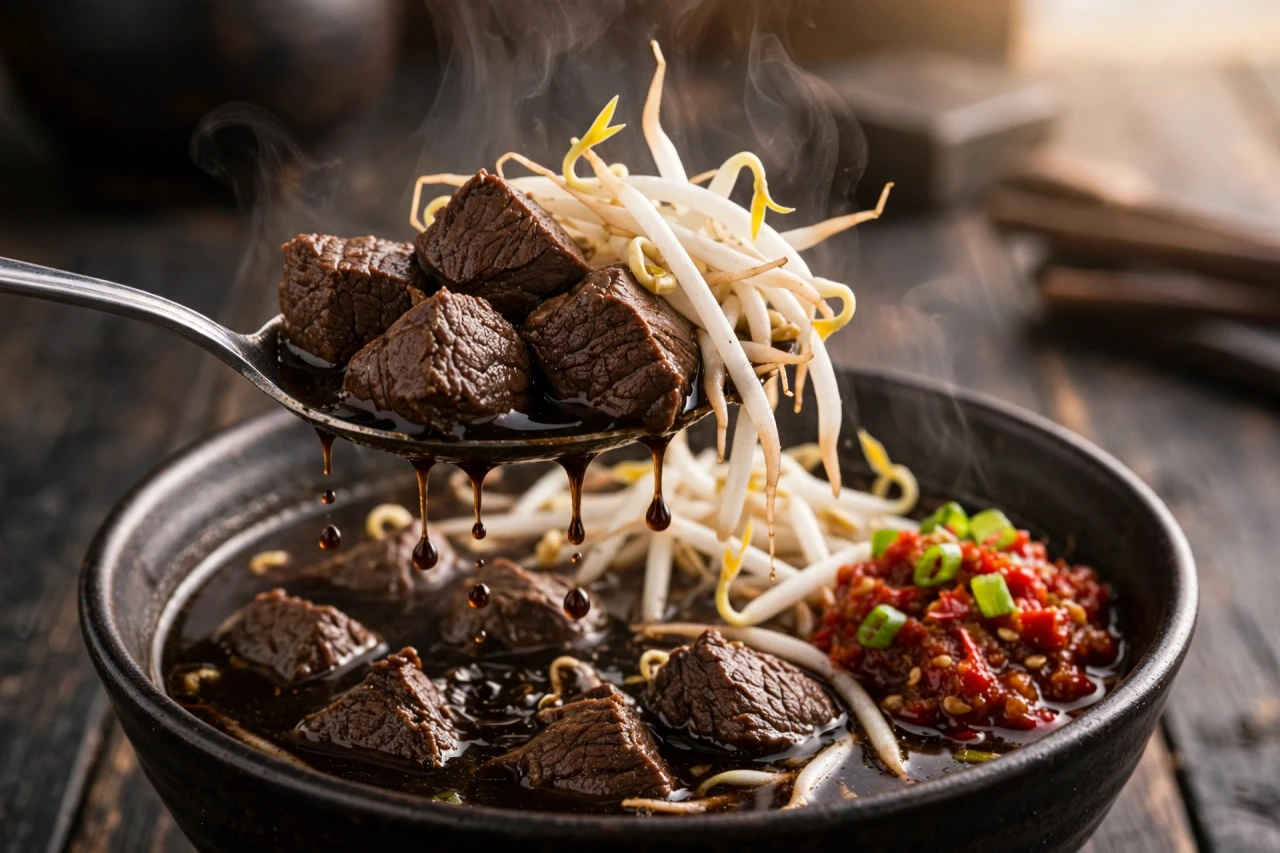
Tender beef, silky black broth — comfort in a bowl.
Instructions
- Prepare the keluak. Crack each keluak nut with a heavy knife or nutcracker and scoop out the soft black flesh, discarding the hard shells. Taste a tiny bit — good keluak is earthy and rich, never sour or rancid. Mash the flesh with a fork into a coarse paste.
- Grind the bumbu. Blend the keluak paste with the shallots, garlic, candlenuts, coriander, turmeric, and red chilies into a smooth paste, adding a splash of water if needed. A food processor or traditional mortar and pestle (cobek) both work — the finer the paste, the silkier the broth.
- Fry the paste until fragrant. Heat the oil in a large heavy pot over medium heat. Fry the bumbu 6–8 minutes, stirring constantly, until deeply fragrant, darkened, and the oil starts to separate at the edges. This step cooks out the rawness and builds the soup's foundation flavor — don't rush it.
- Start the broth. Add the beef cubes to the pot and toss to coat in the fried paste. Pour in the water, then add the lemongrass, galangal, kaffir lime leaves, bay leaves, salt, and sugar. Bring to a boil, skimming off any foam that rises.
- Simmer low and slow. Reduce to the gentlest simmer, partially cover, and cook 2 hours, until the beef is fork-tender and the broth has turned a deep, opaque black. Stir occasionally and top up with a little hot water if the level drops too far. Fish out the lemongrass, galangal, bay leaves, and lime leaves.
- Season and rest. Taste and adjust with more salt and a pinch of sugar — the broth should be deeply savory with a subtle earthy bitterness from the keluak. Let the soup rest 10 minutes off the heat so the flavors settle.
- Assemble the bowls. Divide steamed rice among 6 deep bowls. Ladle the hot black broth and beef over the rice, then top each bowl with bean sprouts, scallions, and fried shallots. Serve with lime wedges, sambal, and shrimp crackers on the side.
Tips & Variations
- Choosing keluak: Buy keluak from an Indonesian or Southeast Asian grocer. Good ones feel heavy with soft, jet-black flesh inside; shake them — if you hear loose rattling, the flesh has dried out. Never use keluak that smells sour or fermented-off.
- Beef cut matters: Chuck or shin with some connective tissue gives the silkiest result after the long simmer. Lean stewing beef works but can turn dry — the gentle simmer keeps everything tender, so don't let it boil hard.
- No keluak? No Rawon. Honestly — the keluak is irreplaceable and defines the dish. If you truly can't find it, you'll make a fine Indonesian beef soup, but call it something else. Some cooks outside Indonesia use a teaspoon of black garlic paste as an approximation, but it's a different dish.
- Short-rib upgrade: Swap half the chuck for bone-in beef short ribs for an even richer broth. Add 20–30 minutes to the simmer and skim the extra fat.
- Control the heat: This recipe is mildly spiced as written. For a spicier bowl, leave the chili seeds in the paste or serve extra sambal on the side — the traditional Surabaya way.
- Make-ahead magic: Rawon tastes even better on day two. Refrigerate the soup (without the fresh garnishes) overnight; the flavors deepen and any fat solidifies on top for easy skimming. Reheat gently and garnish fresh.
- Freezer-friendly: The soup base (broth + beef, no rice or fresh toppings) freezes well up to 3 months. Thaw overnight in the fridge, reheat to a simmer, and assemble bowls with fresh garnishes.
Nutrition Note
At about 380 kcal per bowl (before rice), Rawon is a protein-rich, satisfying meal — the long-simmered beef provides iron, zinc, and B vitamins, while the spice paste contributes antioxidants from turmeric, coriander, and chilies. Bean sprouts add crunch plus vitamin C and fiber. The broth does carry sodium, so if you're watching salt, use less in the pot and let diners season their own bowls. Serve with a measured portion of rice (about 50 g uncooked per bowl) to keep the meal balanced rather than carb-heavy.
Sponsored: see today's deals on recommended kitchen essentials
FAQ
What is keluak and where do I buy it?
Keluak (also spelled kluwek) is the fermented seed of the kepayang tree, native to Indonesia and Malaysia. It has a soft black flesh with a deep, earthy, almost chocolatey savoriness. Find it at Indonesian or Southeast Asian grocery stores, or online from Asian food retailers — it's sold whole in the shell.
Is Rawon spicy?
Traditionally, Rawon itself is only mildly spiced — the heat comes from the sambal served alongside. This recipe keeps the paste gentle so everyone at the table can adjust their own bowl. For authentic Surabaya heat, add a spoonful of sambal terasi.
Can I make Rawon in a pressure cooker?
Yes — fry the bumbu as directed, add everything to the pressure cooker, and cook at high pressure for 35–40 minutes with a natural release. The beef will be tender in a fraction of the time, though the broth benefits from an extra 15-minute uncovered simmer afterward to deepen.
Why is my broth not black enough?
Two usual causes: too little keluak (use the full 8 nuts for 2.5 liters of water) or pale, dried-out keluak. The broth should be a deep opaque brown-black after the long simmer. If it's merely brown, mash in 2–3 more keluak and simmer 20 minutes longer.
What do you serve with Rawon?
Steamed white rice is essential, plus bean sprouts, scallions, fried shallots, lime wedges, sambal, and shrimp crackers. Some Surabaya warungs add salted duck egg or a side of tempeh — both excellent additions.
Rawon is one of those dishes that turns dinner into an event — the inky broth, the melting beef, the bright tangle of sprouts and lime on top. Once you've tasted real keluak depth, no other beef soup quite compares. Made it with short ribs, or tried the pressure-cooker shortcut? Leave a comment below and tell us how your black soup turned out!




Comments
Post a Comment