Spaghetti carbonara is Rome's greatest magic trick: a luxuriously creamy sauce made from nothing but eggs, Pecorino Romano, crisped guanciale, and black pepper — no cream in sight. When done right, the sauce clings to every strand in a glossy, peppery embrace.
The secret isn't a long ingredient list — it's technique. Hot pasta, rendered pork fat, and starchy pasta water emulsify with the eggs off the heat to create that signature silkiness. Master the timing once and you'll never fear carbonara again.
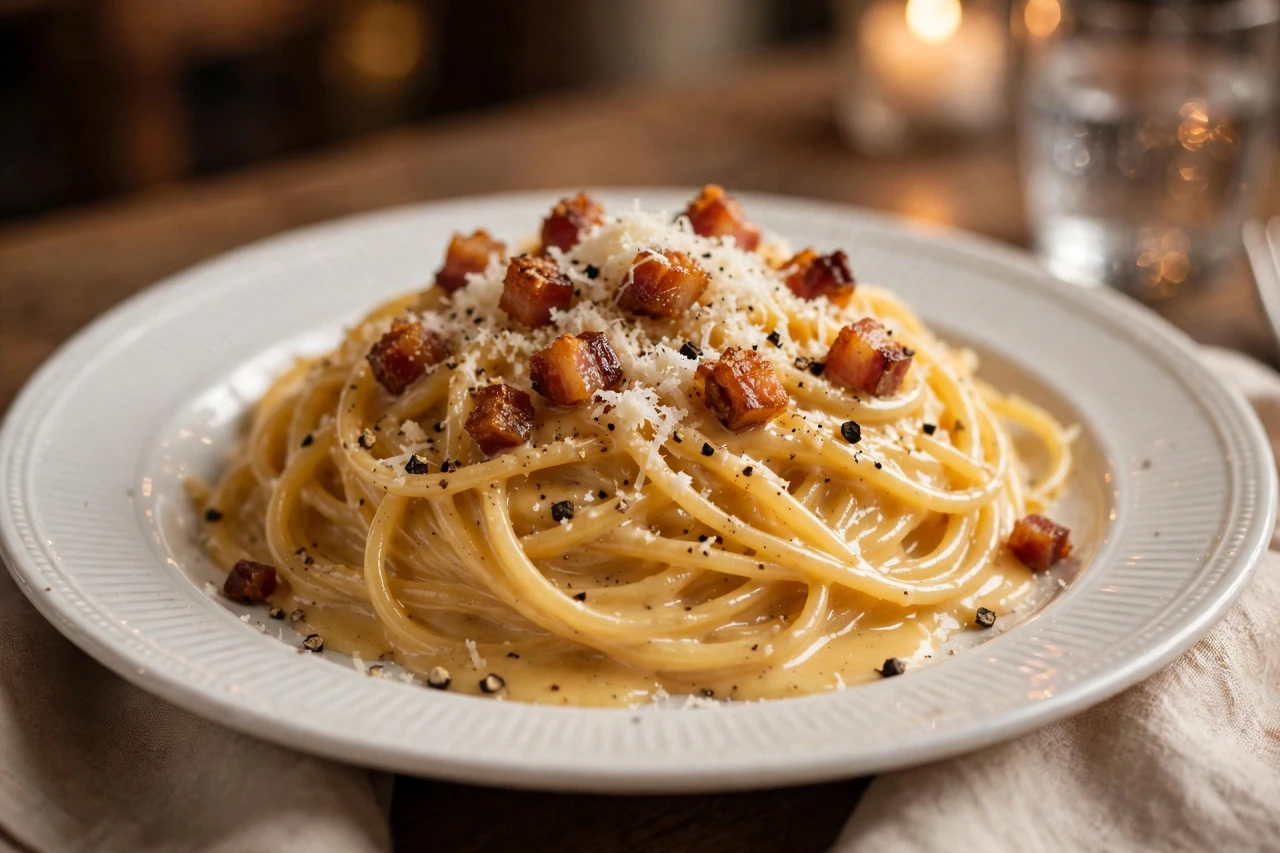
Rome's silkiest pasta, no cream needed.
Recipe Info
- Prep time: 10 minutes
- Cook time: 15 minutes
- Total time: 25 minutes
- Servings: 4
- Calories: ~620 kcal per serving
Ingredients
- 400 g / 14 oz dried spaghetti (or rigatoni)
- 150 g / 5 oz guanciale, cut into small cubes (pancetta works as a substitute)
- 3 large eggs + 2 yolks, at room temperature
- 50 g / ½ cup finely grated Pecorino Romano, plus more to serve
- 2 tsp coarsely cracked black pepper
- Salt for the pasta water
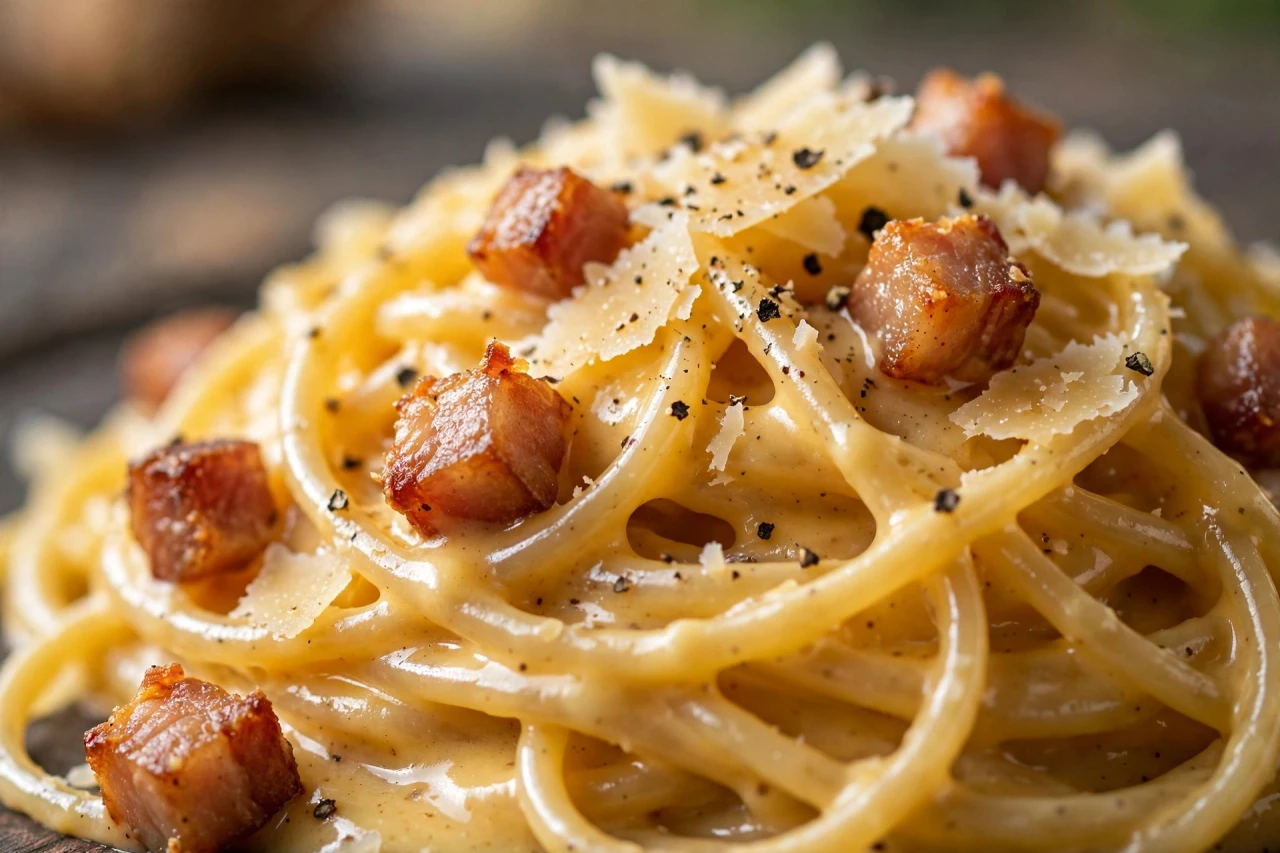
Silky, peppery, perfect.
Instructions
- Boil the pasta: Bring a large pot of well-salted water to a rolling boil. Cook the spaghetti 1 minute less than the package says — very al dente. Before draining, scoop out and reserve 240 ml / 1 cup of the starchy pasta water.
- Crisp the guanciale: Meanwhile, place the guanciale in a cold large skillet and set over medium heat. Cook 6–8 minutes, stirring occasionally, until crisp and golden with its fat rendered. Remove from the heat.
- Mix the gold: In a bowl, whisk the eggs and yolks with the grated Pecorino Romano and the cracked black pepper into a thick paste.
- Temper: Whisk 2–3 tablespoons of the hot reserved pasta water into the egg mixture — this gently warms it so the eggs won't scramble later.
- Combine off the heat: Add the drained pasta to the skillet with the guanciale and its fat. Toss well to coat every strand in the pork fat.
- Create the sauce: Pour in the tempered egg mixture, tossing quickly and continuously. Add splashes of pasta water as needed until the sauce turns silky and clings to the pasta — it should look glossy, never dry or clumpy.
- Serve immediately: Plate at once with extra Pecorino Romano, more cracked pepper, and a few crisp guanciale pieces on top. Carbonara waits for no one.
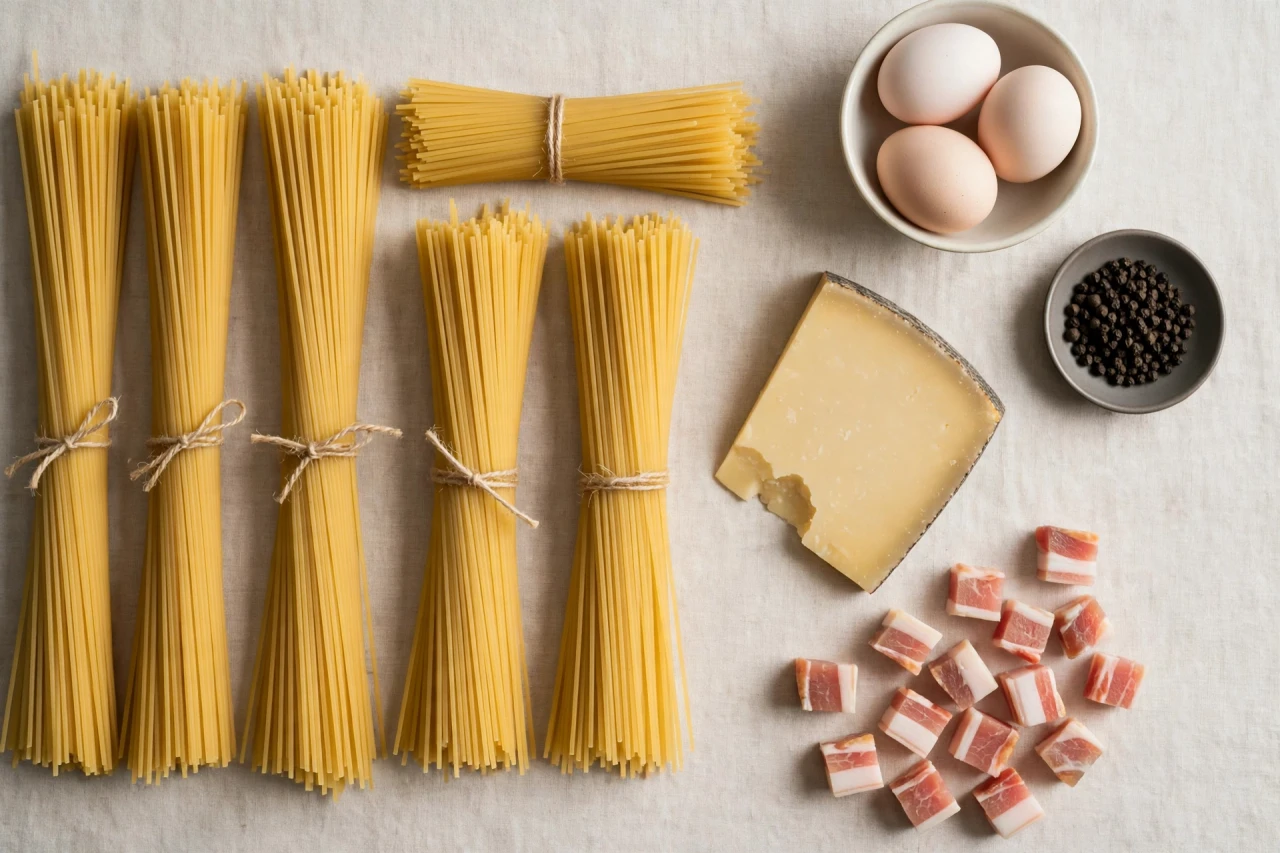
Five ingredients. That's it.
Tips & Variations
- No cream, ever. Authentic carbonara gets its creaminess from eggs, cheese, and pasta water. Cream dulls the peppery bite Romans love.
- Guanciale first, pancetta second. Guanciale (cured pork jowl) is the Roman original; pancetta is a fine substitute. Smoky bacon changes the flavor — use it only in a pinch.
- Room-temperature eggs. Cold eggs are more likely to scramble on contact with hot pasta. Take them out 30 minutes before cooking.
- Off the heat is law. The pan must be off the burner (or on the lowest whisper of heat) when the eggs go in — residual heat cooks the sauce gently.
- Pasta water is liquid gold. Its starch is what emulsifies the sauce. Always reserve more than you think you'll need.
- Crack the pepper coarsely. Fine ground pepper disappears; big cracks give carbonara its signature peppery punch.
- Pecorino vs Parmesan: Pecorino Romano is saltier and sharper — the classic choice. A 50/50 blend with Parmesan mellows it nicely.
- Work fast, serve faster. Carbonara thickens as it sits. Have plates warm and guests seated before the sauce comes together.
- Rigatoni variation: Short ridged pasta like rigatoni or mezze maniche catches the sauce beautifully — many Romans prefer it.
Nutrition Note
Carbonara is an indulgent dish — eggs, cheese, and cured pork make it rich in protein but also in saturated fat and sodium. Enjoy moderate portions, pair it with a simple green salad, and save it for the nights that deserve something special.
Sponsored: see today's deals on recommended kitchen essentials
FAQ
Why is there no cream in authentic carbonara?
The creaminess comes from the emulsion of egg yolks, Pecorino, rendered pork fat, and starchy pasta water. Cream was a later, non-Roman addition — the original needs none of it.
My eggs scrambled — what went wrong?
The pan was too hot when the eggs went in, or you skipped tempering. Always combine off the heat, temper with warm pasta water first, and toss constantly.
Can I use bacon instead of guanciale?
In a pinch, yes — but expect a smokier flavor. Pancetta is the closer substitute since it's also unsmoked cured pork belly.
Can I reheat leftover carbonara?
Not well — the egg sauce breaks and turns grainy when reheated. Carbonara is best eaten immediately; cook only what you'll serve.
What's the difference between carbonara and Alfredo?
Carbonara uses eggs and cured pork with no cream; Alfredo is butter, Parmesan, and (outside Italy) cream. Completely different dishes despite the creamy look.
Craving Rome on a plate? Make this Spaghetti Carbonara tonight — then tell us in the comments if you nailed the silky sauce on the first try. Save this recipe and share it with your fellow pasta lovers.





Comments
Post a Comment