Thai green curry is the perfect weeknight hero: a fragrant, creamy coconut curry that tastes like it simmered all afternoon but comes together in about 35 minutes. The secret is frying the green curry paste in thick coconut cream until the oil splits — that's what unlocks the deep, aromatic flavor no quick stir can fake.
This version keeps things classic: tender chicken, Thai eggplant, crisp bell peppers, and bamboo shoots in a silky green coconut sauce, finished with a handful of fresh Thai basil. Serve it over steaming jasmine rice and watch it disappear. Once you master the paste-frying technique, you'll make this on repeat.
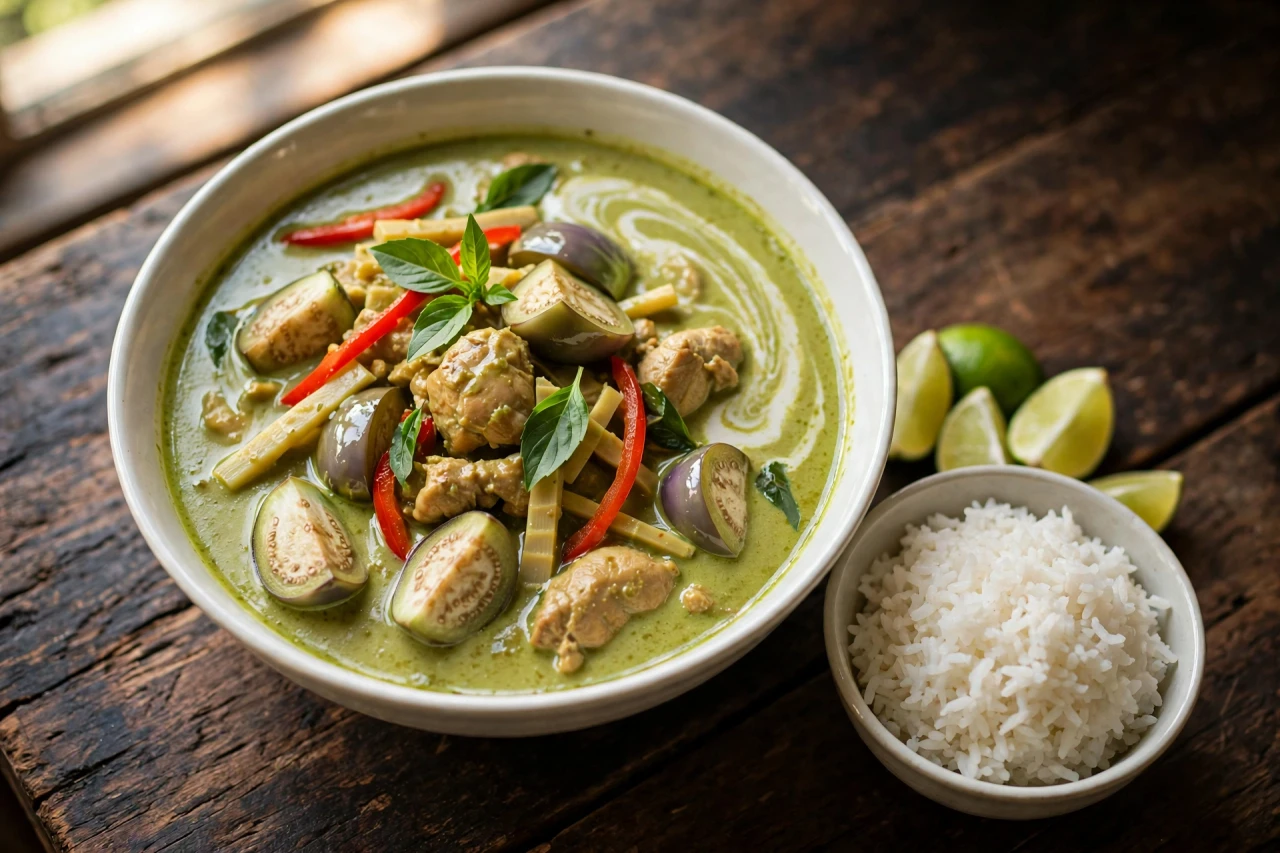
Creamy, fragrant, and ready in 35 minutes.
Recipe Info
- Prep time: 15 minutes
- Cook time: 20 minutes
- Total time: 35 minutes
- Servings: 4 servings
- Calories: approx. 520 kcal per serving (plus rice)
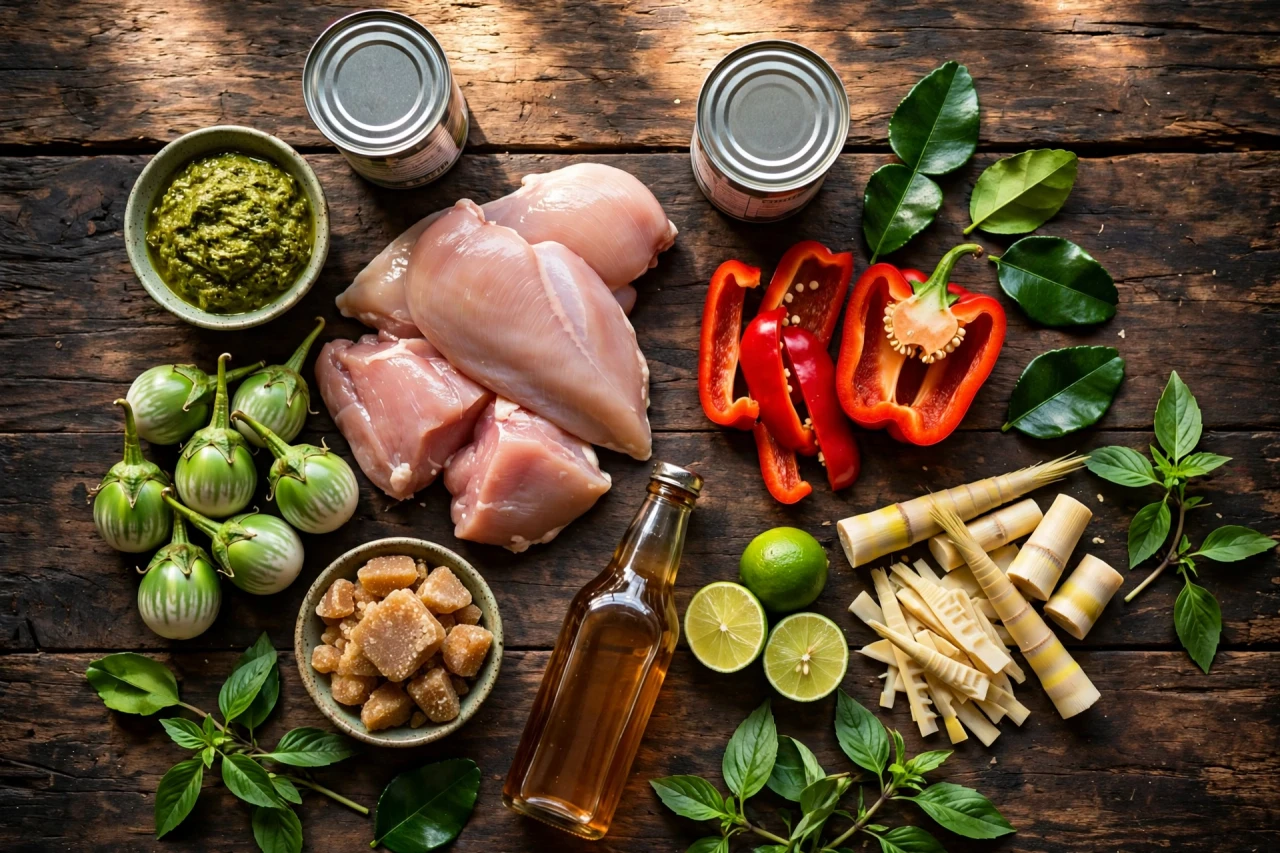
Good curry paste and coconut milk do the heavy lifting.
Ingredients
- For the curry:
- 500 g (1.1 lb) boneless, skinless chicken breast or thigh, cut into bite-size strips
- 400 ml (1⅔ cups) coconut milk, divided (reserve the thick cream from the top)
- 3 tbsp Thai green curry paste (more to taste for extra heat)
- 1 tbsp coconut oil (or the separated coconut cream)
- 200 g (7 oz) Thai eggplants, quartered (or 1 small Japanese eggplant, cubed)
- 1 red bell pepper, cut into thin strips
- 100 g (3.5 oz) bamboo shoots, rinsed and drained
- 4 kaffir lime leaves, torn
- 2 tsp fish sauce, plus more to taste
- 1½ tsp palm sugar (or brown sugar)
- 120 ml (½ cup) water or chicken stock
- To finish and serve:
- 1 large handful Thai basil leaves (about 20 g / ¾ oz)
- 1 red chili, thinly sliced (optional garnish)
- 1 lime, cut into wedges
- 300 g (10.5 oz) cooked jasmine rice (about 75 g / ⅓ cup uncooked per serving)
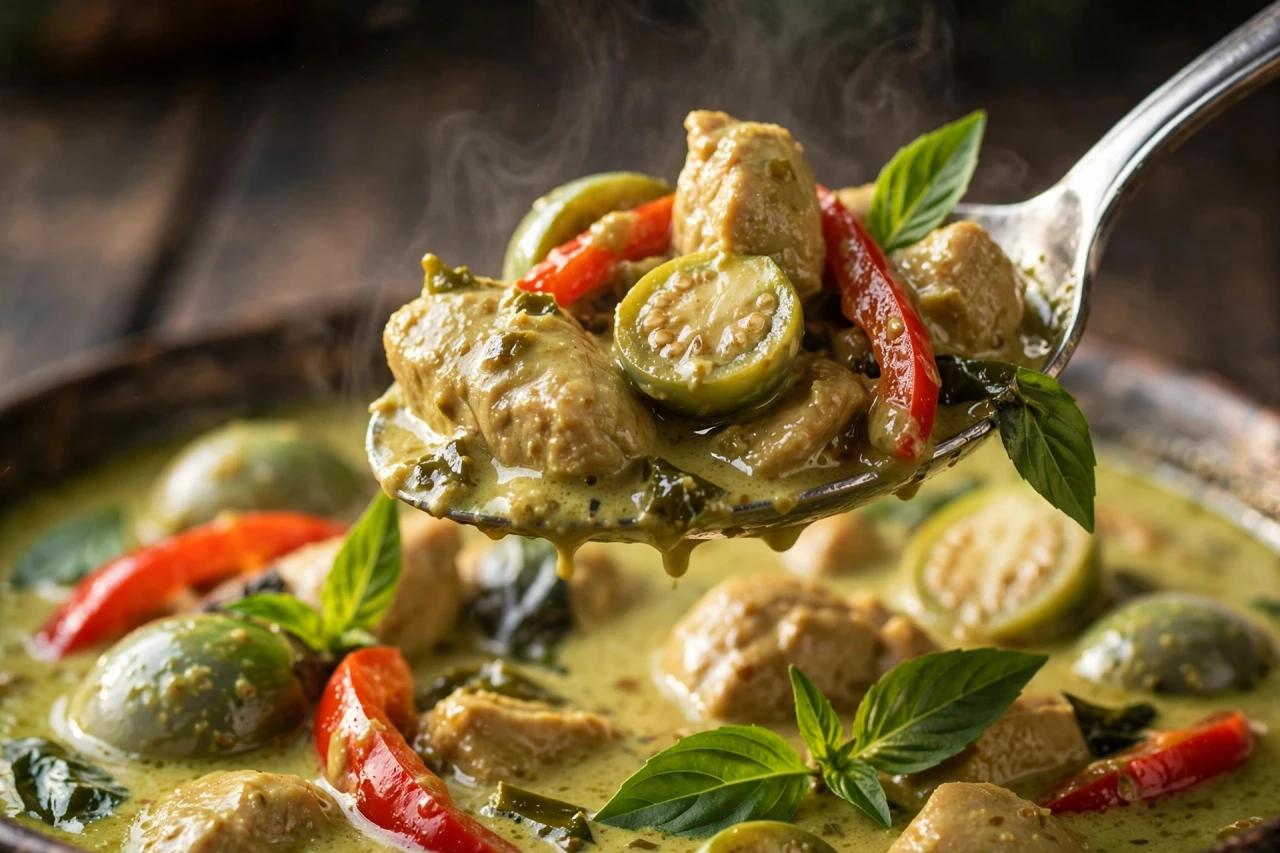
Silky coconut sauce, tender chicken, crisp vegetables.
Instructions
- Split the coconut cream. Scoop the thick cream from the top of the coconut milk cans into a wok or large skillet (reserve the thinner milk below). Heat over medium heat 2–3 minutes until the cream bubbles and a thin layer of oil separates — this is your frying fat. If your coconut milk doesn't split, add the tablespoon of coconut oil.
- Fry the curry paste. Add the green curry paste to the hot cream and fry 3–4 minutes, stirring and mashing, until deeply fragrant and the color darkens slightly. This step is the flavor engine of the whole dish — raw paste tastes flat, fried paste tastes like Thailand.
- Cook the chicken. Add the chicken strips and toss to coat in the fried paste. Cook 4–5 minutes, stirring, until the chicken is mostly opaque and well coated. Don't worry about cooking it through yet — it will finish in the sauce.
- Build the sauce. Pour in the reserved thinner coconut milk, the water or stock, kaffir lime leaves, fish sauce, and palm sugar. Stir well and bring to a gentle simmer — never a hard boil, which can split the coconut milk and make the sauce grainy.
- Add the vegetables. Stir in the Thai eggplant quarters and bamboo shoots. Simmer 6–8 minutes until the eggplant is tender but still holds its shape. Add the red bell pepper strips and simmer 2–3 minutes more so they stay bright and slightly crisp.
- Season and finish. Taste and balance: more fish sauce for saltiness, a pinch more palm sugar if it's too sharp, a squeeze of lime for brightness. Stir in the Thai basil leaves and let them wilt 30 seconds. Remove the kaffir lime leaves if you like (they're edible but tough).
- Serve. Spoon generous jasmine rice into 4 bowls and ladle the green curry over the top. Garnish with sliced red chili and serve with lime wedges. Eat immediately — green curry waits for no one.
Tips & Variations
- The paste is everything: A good-quality Thai green curry paste (Mae Ploy and Maesri are reliable supermarket brands) makes or breaks this dish. Taste your paste's heat level first — brands vary wildly — and adjust the 3-tablespoon baseline up or down.
- Don't boil the coconut milk: A hard rolling boil can curdle coconut milk into an oily, grainy sauce. Keep the curry at a gentle simmer from the moment the milk goes in, and it will stay silky.
- Chicken thigh vs. breast: Thighs stay juicier and are more forgiving if you overshoot the cooking time; breast is leaner and works beautifully if you keep the simmer gentle. Cut either into even strips so they cook at the same rate.
- Make it vegetarian: Swap the chicken for firm tofu or extra vegetables (zucchini, mushrooms, baby corn), use vegetable stock, and replace the fish sauce with soy sauce or a vegetarian fish-sauce alternative. Same technique, same delicious result.
- Thai eggplant substitutes: If you can't find Thai eggplants, use Japanese or Chinese eggplant cut into chunks, or even zucchini — the texture differs slightly but the curry still sings. Add them at the same step.
- Control the heat: Green curry should have a pleasant, warming kick. For milder bowls, use 2 tablespoons of paste and deseed any garnish chilies; for fiery, add an extra tablespoon of paste or a sliced bird's eye chili with the vegetables.
- Leftovers and reheating: The curry keeps 3 days in the fridge and the flavor deepens overnight. Reheat gently over low heat — never microwave on high, which can split the coconut sauce. The basil is best added fresh each time.
Nutrition Note
At about 520 kcal per serving (before rice), Thai green curry is a balanced, satisfying meal: lean chicken provides high-quality protein, coconut milk supplies satisfying fats that keep you full, and the load of vegetables — eggplant, bell pepper, bamboo shoots, basil — brings fiber, vitamin C, and antioxidants. Coconut milk is rich in saturated fat, so if that's a concern, use light coconut milk for the sauce base (keeping a little full-fat cream for frying the paste). Fish sauce means the dish runs salty — taste before adding extra, and balance with lime rather than more salt.
Sponsored: see today's deals on recommended kitchen essentials
FAQ
Can I make Thai green curry with red curry paste instead?
Yes, with the exact same technique — red curry is slightly sweeter and milder, made from dried red chilies. The method (fry paste in coconut cream, add protein, vegetables, season) is identical across Thai curries, so this recipe is your template for all of them.
Why did my coconut milk split?
Almost always from boiling too hard or from a low-fat coconut milk. Keep the curry at a gentle simmer, and use full-fat coconut milk — the fat is what keeps the sauce emulsified and silky. If it does split slightly, a vigorous whisk usually brings it back.
Is Thai green curry very spicy?
It should be pleasantly hot but not punishing. Heat varies by paste brand, so start with 3 tablespoons, taste after the sauce simmers, and add more paste only if you want it fiercer. The coconut milk and palm sugar round out the edges.
What are Thai eggplants and can I skip them?
Thai eggplants are small, round, golf-ball-sized eggplants with a mild, slightly bitter flavor and firm texture that holds up in curry. You can substitute Japanese eggplant or zucchini — the dish won't be 100% traditional, but it will still be delicious.
Can I freeze green curry?
Yes — cool it completely and freeze up to 2 months. Coconut-milk sauces can separate slightly when thawed; reheat very gently and whisk to re-emulsify. Add fresh basil after reheating, and cook fresh rice to serve.
This Thai green curry is the recipe that converts weeknight skeptics — fragrant, creamy, colorful, and on the table in 35 minutes flat. The paste-frying trick is the one technique worth memorizing. Tried it with shrimp, or went full vegetarian with tofu? Leave a comment below and tell us your favorite variation!




Comments
Post a Comment