Vegetable biryani is the kind of dinner that turns an ordinary evening into something special. Layers of saffron-scented basmati rice, warmly spiced vegetables, and crispy fried onions are sealed in one pot and steamed until every grain is fragrant — a celebration dish that is entirely vegetarian and entirely satisfying.
The secret is in the layering. The vegetables are cooked first in a spiced tomato and yogurt masala, then stacked with par-cooked rice, fresh herbs, and fried onions, and left to steam on the lowest heat. That slow finish — the dum — lets the flavours mingle without turning the rice mushy, and lifting the lid at the table is half the joy.
Golden, fragrant, and layered with spice — vegetable biryani at its best.
Recipe Info
- Prep time: 25 minutes
- Cook time: 40 minutes
- Total time: 1 hour 5 minutes
- Servings: 6
- Calories: ~480 kcal per serving
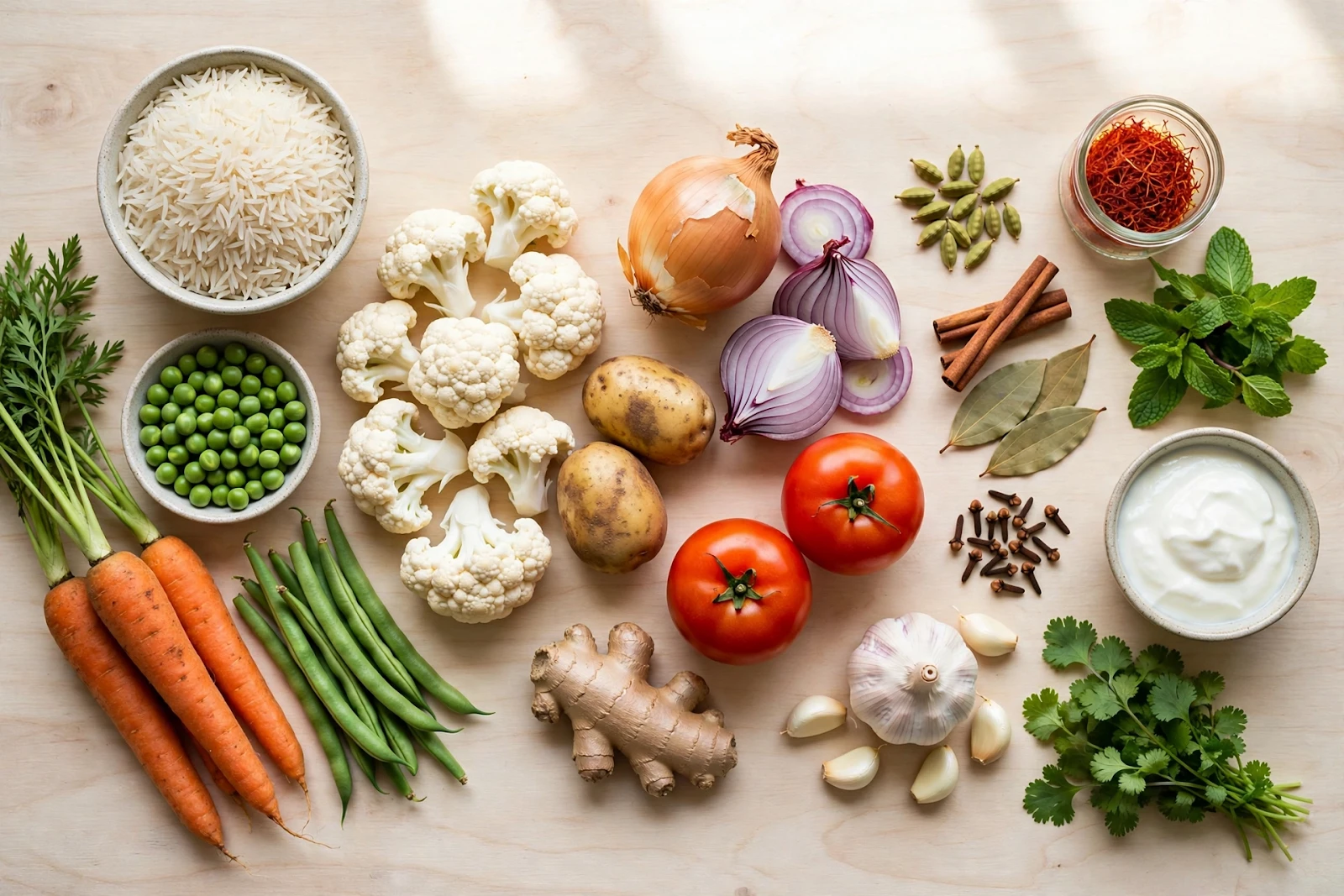
Basmati, whole spices, and a rainbow of vegetables — everything this biryani needs.
Ingredients
- 400 g / 2 cups basmati rice, rinsed until the water runs clear, then soaked 30 minutes
- 1 pinch saffron threads, soaked in 3 tbsp warm milk
- 2 tbsp ghee or vegetable oil
- 2 large onions (about 300 g), thinly sliced
- 1 tbsp ginger, grated
- 3 cloves garlic, minced
- 2 tomatoes (about 300 g), chopped
- 150 g / 1 cup plain yogurt, whisked
- 2 carrots (about 200 g), cut into 1 cm pieces
- 150 g / 1 1/2 cups green beans, cut into 3 cm lengths
- 150 g / 1 cup peas (fresh or frozen)
- 300 g / 3 cups cauliflower florets
- 2 medium potatoes (about 300 g), peeled and cubed
- 2 tsp garam masala
- 1 tsp ground cumin
- 1 tsp ground coriander
- 1/2 tsp turmeric
- 1/2 tsp chilli powder, or to taste
- 4 green cardamom pods, lightly crushed
- 1 cinnamon stick (about 5 cm)
- 2 bay leaves
- 4 cloves
- 1 1/2 tsp fine salt, plus more for the rice water
- 1 large handful fresh cilantro leaves, chopped
- 1 large handful fresh mint leaves, chopped
- 2 tbsp crispy fried onions, plus extra to serve
- Lemon wedges and raita, to serve

Fluffy saffron rice, tender vegetables, and that crispy onion crunch in every bite.
Instructions
- Par-cook the rice: Bring a large pot of salted water to a boil with the cardamom, cinnamon, bay leaves, and cloves. Drain the soaked rice, add it to the pot, and boil for 5 minutes until about 70% cooked — the grains should still have a firm bite. Drain and set aside, discarding the whole spices.
- Crisp the onions: Heat the ghee in a large heavy pot over medium heat. Fry the sliced onions, stirring often, for 10–12 minutes until deep golden and crisp at the edges. Lift out with a slotted spoon and set aside; leave the flavoured ghee in the pot.
- Build the masala: In the same pot, fry the ginger and garlic for 1 minute until fragrant. Add the tomatoes and cook for 4–5 minutes until they soften and the oil begins to separate. Stir in the yogurt, garam masala, cumin, coriander, turmeric, chilli powder, and salt.
- Cook the vegetables: Add the carrots, green beans, peas, cauliflower, and potatoes. Cover and cook over medium-low heat for 10–12 minutes, stirring occasionally, until the vegetables are just tender and coated in thick masala. Remove from the heat.
- Layer the biryani: Spread half the vegetable masala in the pot, top with half the rice, then scatter over half the cilantro, mint, and fried onions. Repeat with the remaining masala, rice, herbs, and onions. Drizzle the saffron milk over the top.
- Steam on dum: Cover the pot with a tight-fitting lid (seal the rim with foil first if the lid is loose). Cook on the lowest possible heat for 20 minutes — do not lift the lid. Rest off the heat for 10 minutes before serving.
- Serve: Fluff gently with a fork, lifting from the bottom so the layers mix without breaking the grains. Serve with lemon wedges, extra crispy onions, and raita.
Tips & Variations
- Do not skip soaking the rice. Soaked basmati cooks evenly and stays long and separate. Rinsing until the water runs clear removes excess starch that would make the biryani sticky.
- Par-cook, never fully cook, the rice. It finishes steaming in the pot. Fully cooked rice layered and steamed again turns to mush.
- Low heat is everything for dum. If your burner runs hot, place a flat griddle or tawa under the pot to diffuse the heat and protect the bottom layer.
- Use whatever vegetables you have. Sweetcorn, mushrooms, or green peppers all work — just keep the total vegetable weight around 1.1 kg so the rice-to-vegetable ratio stays balanced.
- Add paneer for extra protein. Stir 200 g of cubed, lightly fried paneer into the masala in step 4 for a heartier, restaurant-style biryani.
- Make the fried onions ahead. A batch keeps crisp in an airtight container for 3 days and is worth the effort — it is the garnish that makes biryani taste like biryani.
- Leftovers reheat beautifully. Sprinkle a tablespoon of water over the rice, cover, and warm gently on low heat or in the microwave — the steam revives the grains.
Nutrition Note
This is an approximate guide only, not dietary advice. One serving contains roughly 480 kcal, 12 g protein, 13 g fat, and 78 g carbohydrates. The mix of vegetables provides fibre, vitamin C, and potassium, while basmati rice supplies steady energy. To lighten it, use low-fat yogurt and reduce the ghee to 1 tablespoon, or serve a smaller portion with a big cucumber raita.
Sponsored: see today's deals on recommended kitchen essentials
FAQ
Can I make vegetable biryani without saffron?
Yes — saffron adds colour and a distinctive floral note, but the biryani is still delicious without it. A pinch of turmeric in the rice water gives a similar golden colour at a fraction of the cost.
What is the difference between biryani and pulao?
Biryani layers par-cooked rice over a cooked masala and finishes by steaming, which gives distinct, fragrant grains. Pulao cooks the rice together with the vegetables in one pot from the start, so the flavours are more evenly blended.
Can I cook biryani in the oven instead?
Absolutely. After layering, cover the pot tightly with foil and a lid and bake at 160 °C / 325 °F for 30 minutes, then rest for 10 minutes before serving.
How do I keep the rice from getting mushy?
Rinse and soak the rice, boil it only until 70% cooked, and resist lifting the lid during the dum stage. Each of these steps protects the grains, and together they guarantee fluffy rice.
What should I serve with vegetable biryani?
A simple cucumber raita, a lemon wedge, and a crisp salad are the classic partners. Papadums or a small bowl of pickled onions add crunch and contrast.
Make this vegetable biryani the next time you want a dinner that feels like a celebration — and tell us in the comments which vegetables you layered in, and whether your guests guessed it was meat-free.





Comments
Post a Comment