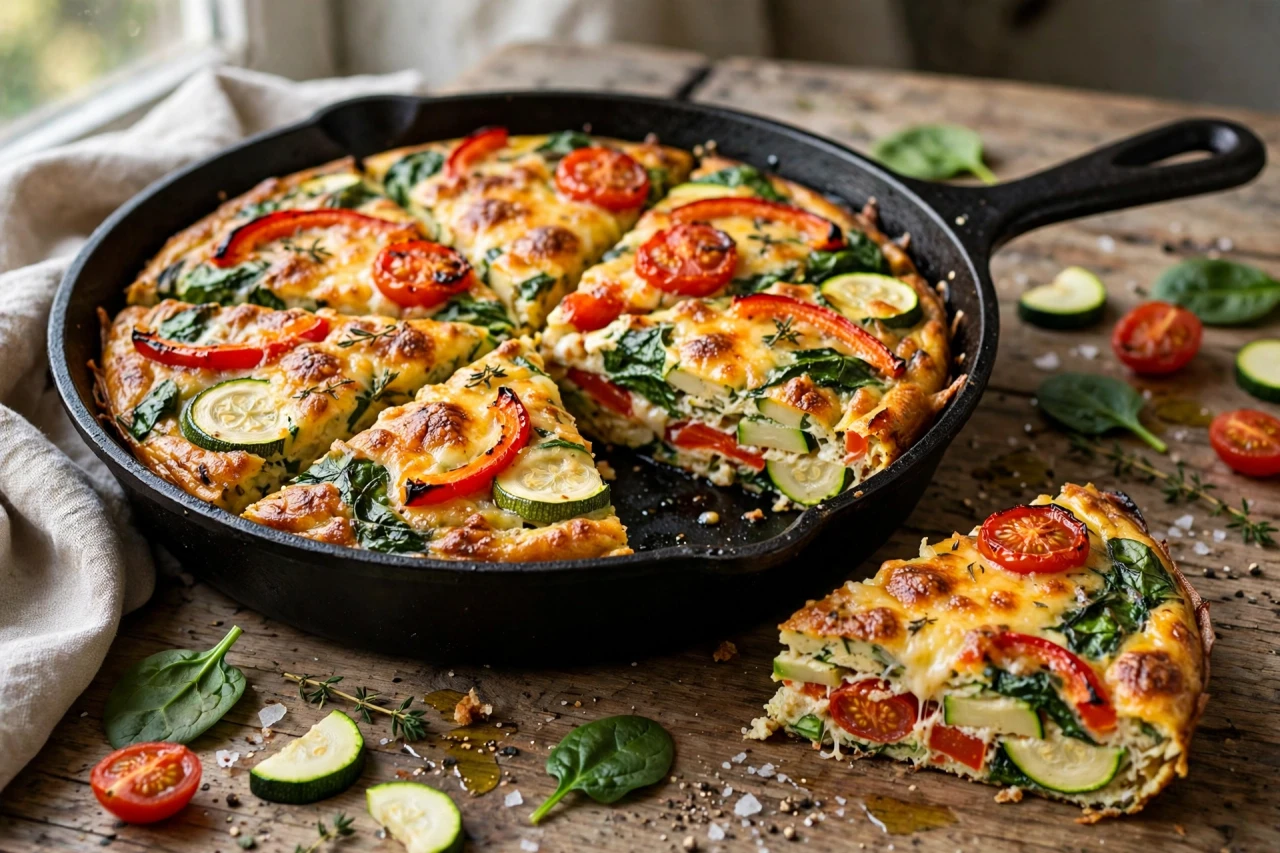
A veggie frittata is the weeknight hero that eats like a brunch indulgence: fluffy oven-baked eggs wrapped around whatever vegetables look good at the market, finished with a blanket of melted cheese. It goes from skillet to oven to table in about 35 minutes.
The trick is cooking the vegetables first so they release their moisture before the eggs go in — that's what keeps the frittata set and sliceable instead of watery. One oven-safe skillet, one bowl, and you've got breakfast, lunch, or a light dinner that reheats beautifully.
Golden, puffy, and loaded with vegetables — breakfast solved.
Recipe Info
- Prep time: 10 minutes
- Cook time: 25 minutes
- Total time: 35 minutes
- Servings: 6 wedges
- Calories: approx. 210 kcal per wedge
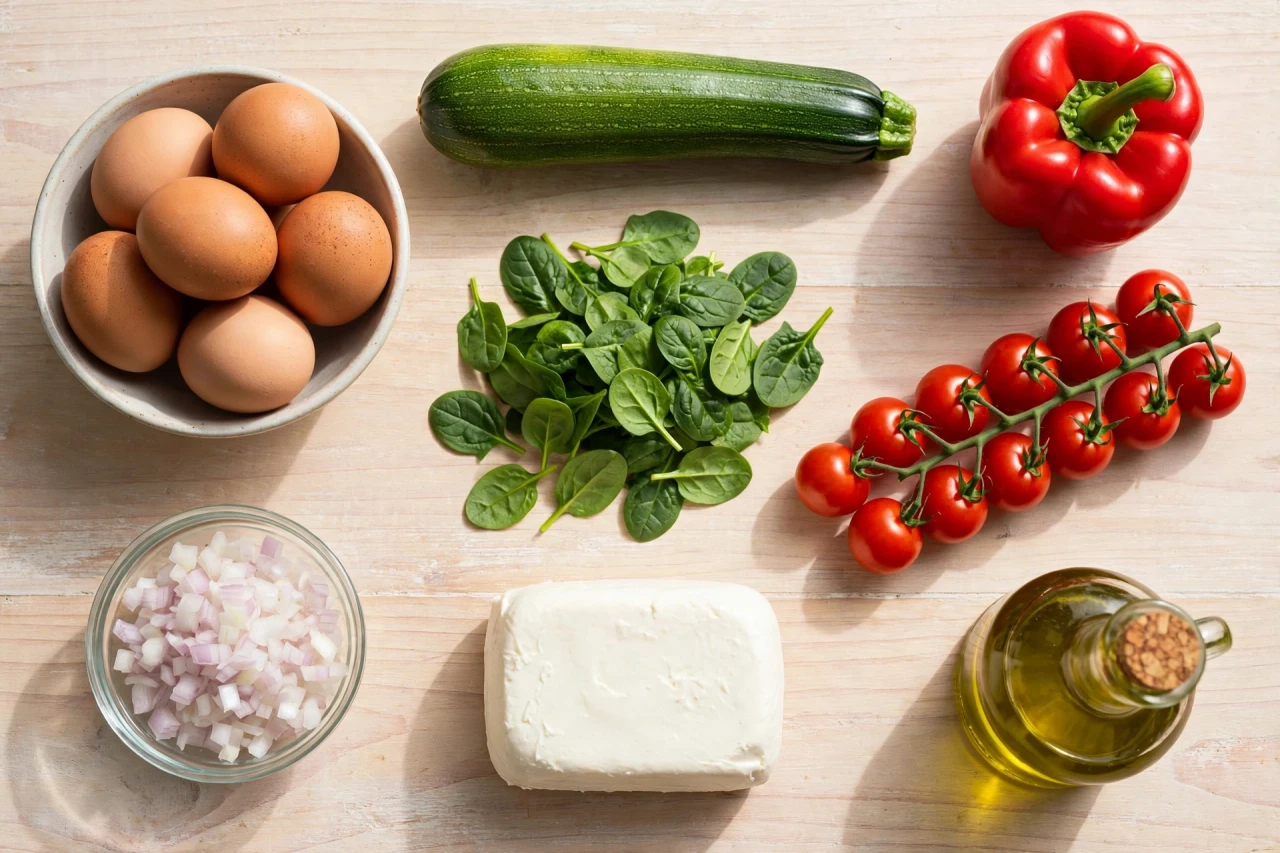
Use whatever vegetables are in season.
Ingredients
- For the egg base:
- 8 large eggs, at room temperature
- 120 ml (½ cup) milk
- 100 g (1 cup) shredded mozzarella or cheddar cheese
- 1 tsp salt
- ½ tsp freshly ground black pepper
- 1 tsp Italian seasoning (or 2 tbsp chopped fresh basil or parsley)
- For the vegetables:
- 2 tbsp olive oil
- 1 small yellow onion, diced
- 1 medium zucchini (about 200 g), diced
- 1 medium red bell pepper, diced
- 150 g (1 cup) baby spinach leaves
- 150 g (1 cup) cherry tomatoes, halved
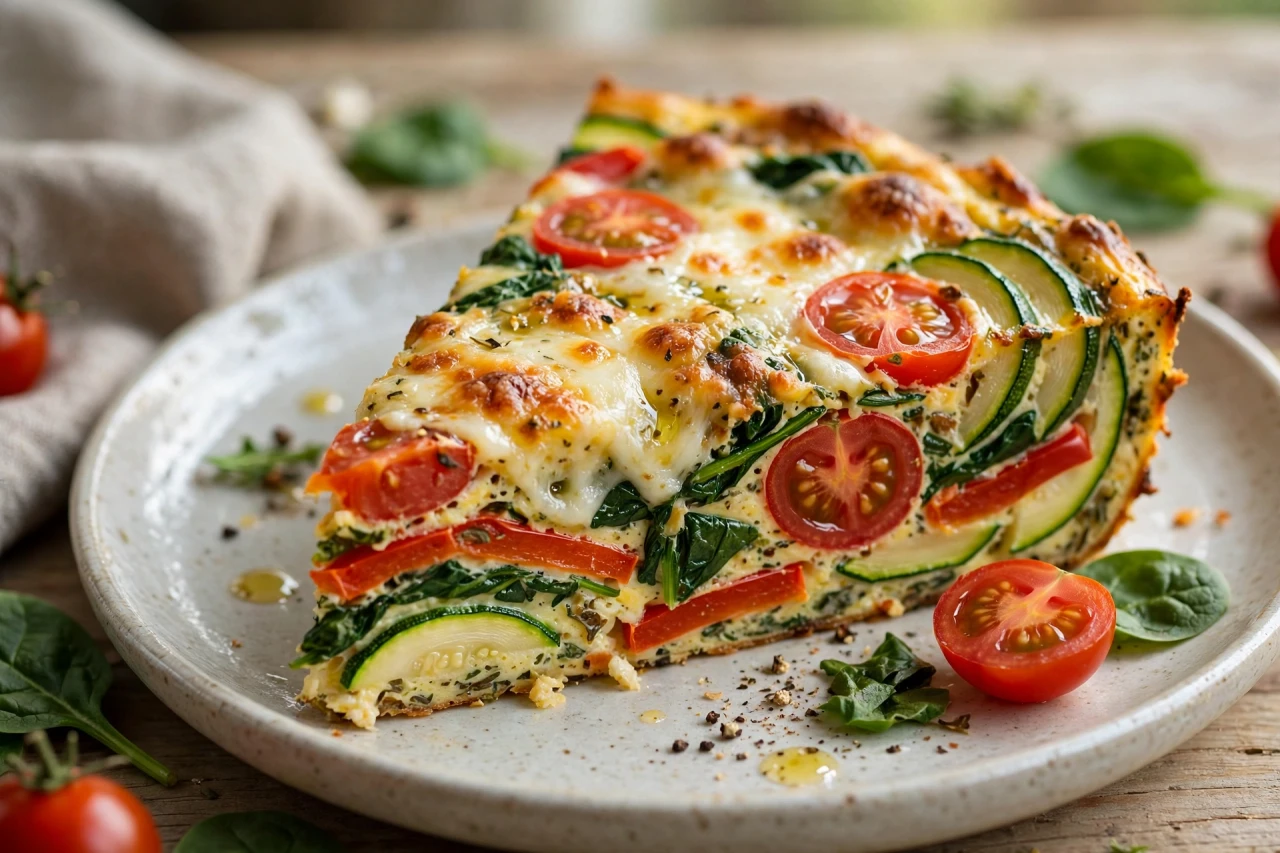
Every slice is packed with color.
Instructions
- Heat the oven. Position a rack in the center and preheat to 190°C (375°F). You'll finish the frittata in the oven, so make sure your skillet is oven-safe.
- Sauté the vegetables. Heat the olive oil in a 25 cm (10 in) oven-safe skillet over medium heat. Cook the onion 3 minutes, then add the zucchini and bell pepper and cook 5–6 minutes until just tender. Stir in the spinach and cook until wilted, about 1 minute. Spread everything in an even layer.
- Whisk the eggs. In a large bowl, whisk the eggs, milk, half the cheese, salt, pepper, and Italian seasoning until well combined and slightly frothy. Room-temperature eggs puff up better than cold ones.
- Pour and top. Pour the egg mixture evenly over the vegetables in the skillet. Scatter the cherry tomato halves cut-side up over the top and sprinkle on the remaining cheese.
- Bake. Transfer the skillet to the oven and bake 18–22 minutes, until the center is just set — it should jiggle only slightly when you nudge the pan. The top will be golden and puffed.
- Rest and slice. Let the frittata rest 5 minutes in the skillet (it finishes setting as it cools). Run a spatula around the edge, slide onto a board or serve straight from the skillet, and cut into 6 wedges.
- Serve or store. Serve warm or at room temperature. Leftovers keep 3 days in the fridge and reheat well in the oven or microwave.
Tips & Variations
- Don't overbake: A frittata keeps cooking from residual heat. Pull it when the center still has a slight wobble — carryover heat finishes it, and overbaked eggs turn rubbery.
- Use an oven-safe skillet: Cast iron is ideal, but any skillet with a metal or oven-safe handle works. If yours has a plastic handle, start the frittata in the skillet and slide it into a greased pie dish before baking.
- Drain wet vegetables: Mushrooms, zucchini, and thawed frozen spinach release a lot of water. Sauté them until dry before the eggs go in, or your frittata won't set.
- Cheese swaps: Feta gives a salty punch, gruyère melts silkily, and parmesan adds a nutty crust on top. Use what you love — about 100 g (1 cup) total.
- Add protein: Diced ham, cooked bacon, or smoked salmon folded in before baking turn this into a heartier main. Keep add-ins under about 150 g so the eggs still bind.
- Make it ahead: Bake the frittata, cool completely, and refrigerate whole. It's excellent cold in lunchboxes, or reheated at 180°C (350°F) for 10 minutes.
- Fresh herb finish: A shower of chopped basil, chives, or parsley right out of the oven lifts the whole dish — don't skip it if you have herbs on hand.
Nutrition Note
At about 210 kcal per wedge, a veggie frittata is a genuinely balanced meal: protein from the eggs, fiber and vitamins from the vegetables, and moderate fat from the cheese and olive oil. It's naturally gluten-free and easy to lighten further with low-fat milk and less cheese. Watch the sodium if you're using salty cheeses like feta — taste before adding extra salt.
Sponsored: see today's deals on recommended kitchen essentials
FAQ
What's the difference between a frittata and an omelette?
An omelette is folded around its filling and cooked only on the stovetop. A frittata mixes everything into the eggs and finishes in the oven — no folding, no flipping, and it serves a crowd.
Why is my frittata watery?
Almost always undercooked vegetables. Sauté them until their moisture cooks off before adding the eggs, and make sure the center is set (only a slight jiggle) before removing it from the oven.
Can I make a frittata without an oven-safe skillet?
Yes. Cook the vegetables in any skillet, then transfer them to a greased 23 cm (9 in) pie dish or baking dish, pour over the egg mixture, and bake as directed.
How do I know when the frittata is done?
The edges will be set and golden, and the center will jiggle just slightly when nudged. A knife inserted in the center should come out clean with no runny egg.
Can I freeze a veggie frittata?
Yes — cool completely, wrap individual wedges tightly, and freeze up to 2 months. Thaw overnight in the fridge and reheat at 180°C (350°F) for 10–12 minutes.
This veggie frittata proves that simple eggs and seasonal vegetables can feel like a special occasion — golden, cheesy, and endlessly adaptable. Bake one this weekend and watch it disappear. Tried your own vegetable combo? Leave a comment below and share what you used!




Comments
Post a Comment