Classic osso buco is Milan's great slow-braised masterpiece: cross-cut veal shanks simmered for hours in tomato and red wine until the meat is spoon-tender and the marrow in the bone turns silky and rich. The name means "bone with a hole" — and that hole, filled with marrow, is the prize at the centre of the dish.
This is a weekend dish, not a weeknight one: two and a half hours of gentle braising while the kitchen fills with the smell of wine, tomato and bay. The payoff is meat that falls off the bone, a sauce that coats a spoon, and a bright gremolata on top that cuts through all that richness. Serve it over saffron risotto, the Milanese way, and it is unforgettable.
Illustration: Tender shanks, rich sauce and gremolata — osso buco done right.
Recipe Info
- Prep time: 25 minutes
- Cook time: 2 hours 30 minutes
- Total time: 2 hours 55 minutes
- Servings: 4
- Calories: ~620 kcal per serving
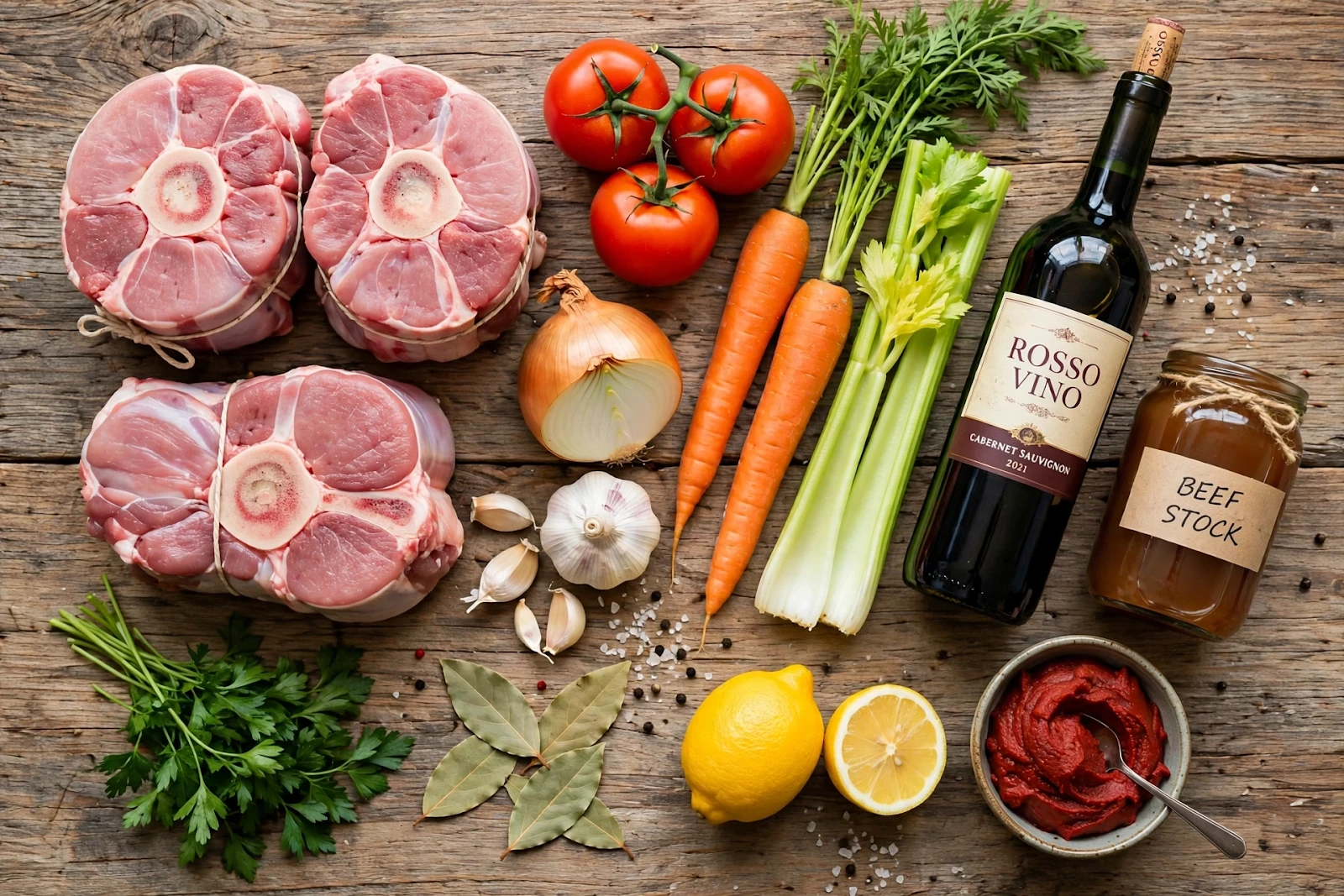
Illustration: Veal shanks, wine and soffritto — osso buco starts here.
Ingredients
- 4 veal shanks, about 4 cm / 1 1/2 inches thick (about 1.2 kg / 2 1/2 lb total), tied with kitchen twine
- 60 g / 1/2 cup all-purpose flour
- 1 1/2 tsp fine sea salt
- 1 tsp black pepper
- 3 tbsp olive oil
- 2 tbsp unsalted butter
- 1 onion, finely diced
- 2 carrots, finely diced
- 2 celery stalks, finely diced
- 4 garlic cloves, minced
- 2 tbsp tomato paste
- 180 ml / 3/4 cup dry red wine
- 400 g / 14 oz can chopped tomatoes
- 500 ml / 2 cups low-sodium beef stock
- 2 bay leaves
- For the gremolata: zest of 1 lemon, 3 tbsp chopped flat-leaf parsley, 1 small garlic clove, finely minced
Instructions
- Season and dredge: Pat the veal shanks very dry and season all over with salt and pepper. Tie each shank with kitchen twine so the meat holds its shape around the bone, then dredge lightly in flour, shaking off the excess.
- Brown the shanks: Heat the olive oil and butter in a large heavy pot or Dutch oven over medium-high heat. Brown the shanks for 3–4 minutes per side until deep golden — this colour is the foundation of the sauce, so do not rush it. Transfer to a plate.
- Cook the soffritto: Lower the heat to medium and add the onion, carrots and celery to the same pot. Cook for 6–8 minutes, stirring often, until softened and lightly golden. Stir in the garlic and tomato paste and cook for 1 minute more until the paste darkens slightly.
- Deglaze with wine: Pour in the red wine, scraping up all the browned bits from the bottom of the pot. Let it bubble for 2–3 minutes until the harsh alcohol smell fades and the wine has reduced by about half.
- Build the braise: Stir in the chopped tomatoes, beef stock and bay leaves. Return the shanks to the pot, nestling them into the liquid — it should come about two-thirds of the way up the meat. Bring to a gentle simmer.
- Braise low and slow: Cover with the lid slightly ajar and braise on the lowest heat (or in a 160 °C / 325 °F oven) for 2–2 1/2 hours, turning the shanks once halfway through. The osso buco is done when the meat is spoon-tender and the sauce is rich and glossy — if the sauce is thin, lift the shanks out and simmer it for 10 minutes to reduce.
- Make the gremolata and serve: While the shanks rest for 5 minutes, mix the lemon zest, parsley and minced garlic for the gremolata. Serve each shank over saffron risotto or polenta with plenty of sauce spooned over, and scatter generously with gremolata. Do not forget the marrow — scoop it out with a small spoon and spread it on crusty bread.

Illustration: Fall-apart tender with the marrow to scoop — the shank worth the wait.
Tips & Variations
- Tie the shanks with twine. Without it the meat can slip off the bone during the long braise and you lose the classic presentation. A simple loop around the middle is all it takes — remove the twine before serving.
- Brown properly, in batches. Crowded shanks steam instead of browning, and a pale shank means a pale sauce. Give each one space and let the colour develop.
- Keep the braise barely bubbling. A hard boil toughens the meat and clouds the sauce. You want the occasional lazy bubble breaking the surface — that is the sweet spot for tender, silky results.
- Do not skip the gremolata. The fresh lemon zest, parsley and raw garlic are not a garnish — they are the dish's bright counterpoint to hours of rich braising, and osso buco tastes flat without them.
- Serve it the Milanese way. Saffron risotto (risotto alla Milanese) is the traditional partner, but creamy polenta, mashed potatoes or crusty bread to mop up the sauce all work beautifully.
- It tastes even better the next day. Make the osso buco a day ahead, refrigerate it in its sauce and reheat gently — the flavours deepen overnight and the sauce thickens.
- Slow cooker option. After browning and deglazing, transfer everything to a slow cooker and cook on low for 6–7 hours or on high for 3–4 hours, until the meat is tender.
Nutrition Note
Per serving (without the risotto), classic osso buco provides roughly 620 kcal with about 52 g of protein, 14 g of carbohydrate and 36 g of fat. Veal shank is a rich source of protein, iron and B12, and the slow braise renders much of the connective tissue into silky gelatin. The marrow is delicious but high in saturated fat, so enjoy it as the small treat it is rather than a second helping.
Sponsored: see today's deals on recommended kitchen essentials
FAQ
What can I use instead of veal shanks?
Beef shanks are the closest substitute and are often easier to find — they are larger, so allow an extra 30 minutes of braising. Lamb shanks also work well and bring a richer flavour, though the dish is then no longer classic osso buco.
Can I use white wine instead of red?
Yes — the traditional Milanese version actually uses white wine. Red wine gives a deeper, darker sauce; white wine gives a lighter, more delicate one. Use a dry wine either way, and never a sweet one.
Why is my sauce thin?
It usually just needs more time. Lift the shanks out, keep them warm, and simmer the sauce uncovered for 10–15 minutes until it coats a spoon. A lid left slightly ajar during the braise also helps the sauce reduce naturally.
Can I cook osso buco in a slow cooker?
Yes — brown the shanks and build the sauce on the stove first (those steps create the flavour), then transfer everything to a slow cooker on low for 6–7 hours or high for 3–4 hours. Add the gremolata fresh at serving time.
What should I serve with osso buco?
Saffron risotto is the classic Milanese pairing and the one most worth making. Creamy polenta, mashed potatoes or a simple crusty loaf are all excellent, and a bitter green salad on the side balances the richness.
Slow, rich and worth every minute — classic osso buco is the kind of dish that turns a quiet Sunday into an occasion. If you try it, tell us in the comments what you served it with: saffron risotto, polenta or crusty bread?





Comments
Post a Comment